Saturday, March 24, 2012

An Existential Laurel And Hardy

This appeared in today's The Indian Express.

DOGMA Lars Iyer


In his recent “literary manifesto after the end of literature and manifestos”,  the Danish-Indian academic Lars Iyer asserted that literature nowadays was no more than a pantomime, and a tired one at that. He called upon writers to “resist closed forms”, to “mark the absence of Hope, of Belief, of Commitments, of high-flown Seriousness” as well as a sense of imposture. “The end is nigh,” he concluded. “The party’s over.”

All of this – along with a vein of dark comedy – was much in evidence in Iyer’s first novel, Spurious (though traditionalists would say it was more a series of linked blog posts than an actual novel). Spurious introduced to the world a pair of bumbling academics, the first one named Lars, the second, simply W. Philosophers manqué, a pair of Brods without a Kafka, they made their way through a universe facing “end times”, with the hapless Lars being grandly insulted and upstaged by W. at every opportunity.

The pair returns in Iyer’s new work, Dogma, with W. still firmly convinced that the end is nigh: “Our end or the end of the world?” “Both!” Happily, his insults are as Falstaffian as ever. He asserts that if he’s a Socrates, Lars is “a Diogenes gone mad”, exhorting him time and again, as the policeman tells the lost wayfarer in the Kafka story, to “give it up!” W. is also compelled to make fun of Lars’ Hindu heritage, including one memorable occasion when, referring to a statue of Nataraja, he mocks his luckless confrère: “What's your cosmic dance like? It's the funky chicken, isn't it?”

Dogma is virtually without plot, but in the course of its pages, the two embark upon a lecture tour of the United States, visiting, among other places, Nashville and Memphis, which of course brings about much mock-philosophizing by W. Not that all of this is without insight, such as the statement that “capitalism is the evil twin of true religion”. At other times, there’s laughter from the abyss: “Philosophy is like an unrequited love affair. You get nothing back; there’s only longing, inadequacy, a life unfulfilled”.

Abandoning their dream to “live on the fruits of America”, the gin-quaffing team returns home, W. to Plymouth, Lars to Newcastle, where the latter discovers an infestation of rats – a slightly forced continuation of the situation in Spurious, where his walls were  beset by mysterious  (and symbolic) damp and fungus. Nothing deterred, Lars and W. conceive of their own dogma for presentations, inspired by filmmaker Lars von Trier’s Dogme95 movement. With these two, however, the dogma is simply an excuse to make up rules as they go along, with no ripples being created in the world they seek to influence.

Soon, W. finds that his academic career in jeopardy and, like a Continental philosopher’s version of Laurel and Hardy, or even an updated, garrulous version of Vladimir and Estragon, the two stagger through life as if in an “eternal waiting room”, sometimes sinking into nihilism: “Every day is only the fresh ruination of any project we might give ourselves…What have we learnt except that we have no contribution to make, nothing to say, nothing to write, and that we have long since been outflanked by the world, overtaken by it, beaten half to death by it?”

Dogma, then, is a snap of the fingers in the faces of those still under the spell of traditional novelistic forms. As for Lars and W., there’s another book on the way charting their further exploits. They can’t go on, they’ll go on.

Thursday, March 15, 2012

Mumbai: The Cities Within

What's interesting about these five recent books set in Mumbai is that they bring us glimpses of the city, from the Thirties to the present day, in almost chronological order. 


This piece appeared in the March 2012 issue of MW Magazine.


If you were to arrive at Mumbai’s Sahar airport and take a taxi all the way to the Taj Mahal hotel in Colaba, you would travel through not one city, but several. 

There would be the city of the slums bordering the airport, the blue tarpaulin roofs of which you would have been able to spot even as the plane was circling above. There would then be the neighbourhoods from Andheri to Bandra, the tony coffee shops and meretricious pubs of which would be filled with scriptwriters, actors, models and others looking for the break to transform their lives. If an especially chatty driver was behind the wheel of the taxi you were in, he’d tell you of his world, of how his current occupation was just a stop-gap before he hit the big time with a home-grown scheme or two. After a quick glance at the rear-view mirror to assess his chances, he might even offer to escort you to the city’s quarters of ill-repute, where, he would affirm, you would be able to sample the pleasures of drugs or the flesh. Shrugging off his offers, you would look out of the window to find yourself in the area of Mumbai called “the town” by suburban commuters. Sweeping down the Art Deco bordered sea-face to the mock Gothic buildings that still speak of colonial solidity, you’d finally reach your destination, the hotel that, though scarred by a recent, horrific act of terrorism, still stands as a beacon of civility and repose.

Centuries ago, the roads you just travelled down didn’t exist; it was a series of reclamation projects – not to mention the fortunes that arose from trade in opium and cotton -- that unified the seven islands to create the city you witnessed. Now, five authors of recently published books seek to reclaim older memories and more contemporary ways of life, charting, almost in reverse chronological order, the ages of Mumbai that made up your journey from airport to hotel.

 The Mumbai of the three decades from 1935 -- a time of intermingling, of civility and of hospitality --  is what Naresh Fernandes brings alive in his Taj Mahal Foxtrot. Even those not alive during those years would be nostalgic about this age of “conspicuous cosmopolitanism”; in fact, to look at the photographs that the book is sprinkled with is to wonder whether this really was the same city you see when looking out of the window today.

Fernandes unearths the often-ignored legacy of the jazz musicians who came here from the US and Europe as well as home-grown talent, much of it from Goa. The “energetic, improvised form” of the book celebrates a long-gone culture, chronicling visits by Louis Armstrong, Dave Brubeck and others, and the rapturous reception they received – not to mention Frank Fernand and Chic Chocolate, and the latter’s effect on Hindi film music because of his participation in the songs of Bhagwan’s Albela.

The grand ballroom of the Taj Mahal played host to many a memorable concert, and Fernandes also mentions other institutions, now vanished from sight if not memory: Napoli and Bombelli’s in Churchgate, for instance. Though the recollections are largely effervescent – such as the time when the combined bands of Chic Chocolate and Micky Correa launched into a jaunty swing version of Jana Gana Mana to cheering crowds at the Taj on the night of August 14, 1947 – there’s also an elegiac quality to the book. Scott Fitzgerald wrote of America’s Jazz Age that “it was an age of miracles, it was an age of art, it was an age of excess, and it was an age of satire’, and, as TajMahal Foxtrot makes clear, Mumbai itself experienced such an age.

It was a city, Fernandes writes in summation, “that gave everyone the space to play their own melody the way they heard it”. Before you can do so, he himself adds tersely: “That era has passed.” The city rode into the Sixties on waves of rising populist agitations but optimism undimmed. This is the Mumbai of Kiran Nagarkar’s novel, The Extras, his follow-up to Ravan and Eddie, and reading it is like listening to the tales told by an interesting yet garrulous uncle reminiscing about his past. It follows the fortunes of Ram Pawar and Eddie Coutinho as they make their way through a city teeming with people and stories. The music they’re inspired by is not jazz but pop and rock standards as well as, of course, Bollywood songs, initially performed in the novel by local “brass bandwallahs”.

Life as a taxi driver, as a film extra and as a music composer: through Ravan and Eddie’s occupations, Nagarkar paints a picture of a city impatient to get ahead. The pace of Mumbai is already frantic: one of the characters observes that her life is like a counter on a carom board, hurtling from one corner to another. Nagarkar’s characters grow increasingly anxious to break out of their ways of life at the crumbling CWD chawl in Mazagaon, as a fictional Maiboli Sangh launches a ‘Maharashtra for Maharashtrians’ agitation and underworld dons seek to carve out fiefdoms. That representatives of both these types would, in years to come, scar the city forever is what you can discern between the lines.

At one point, with trademark irreverence, Nagarkar has Ravan muse that national integration could only truly be found on Falkland Road, the city’s red-light district, as women of all nationalities were to be found there. That infamous area – as your taxi driver would have informed you -- is bordered by Shuklaji Street, where you could once discover integration of another kind, the one forged by smoking opium. This “city of O” is what you come across in Jeet Thayil’s debut novel, Narcopolis. Primarily set in the Seventies, this is a hallucinatory ode to Mumbai: the “hero or heroin” of the story.

In Narcopolis is to be found a city wallowing in its refuse, as the narrative interweaves the lives of those such as Dimple, a hijra with a penchant for reading; Rumi, a violent and desperate businessman; Mr Lee, a refugee from mainland China; Dom, the narrator, who speaks of “visitations from absent friends”, stories that are “straight from the pipe’s mouth”; and Rashid, the owner of the opium den in which the others congregate.

It’s a chemical romance that begins and ends with the word “Bombay”, where all manner of depravity arising out of addiction is on parade. When the novel moves on from the Seventies in tracing the decline in the characters’ lives, you find an elegy for an earlier time: “Already now there were times when he could feel it slipping away, a way of life vanishing as he watched, the pipes, the oil lamps layered with years of black residue, the conversations that a man would begin and lose interest in, all the rituals that he revered and obeyed, all disappearing.” 

Narcopolis sweeps on to cover the aftermath of the bloody 1992/93 riots, “when the city killed itself” and after which the narrator begins to see the metropolis as an “image of my cancelled self: an object of dereliction, deserving only of pity, closed, in all ways, to the world”.

For others, though, the city represents a way to validate the self, not to cancel it. Like Ravan and Eddie, these aspirants seek to break into the world of film and TV; that most who pursue such dreams fall by the wayside is no deterrent. This is the backdrop to the by-now well-known saga of Maria Susairaj, Neeraj Grover and Emile Jerome, names gleefully pounced upon by the tabloids just some years ago.

 The tragedy is recounted with chilling exactitude in Meenal Baghel’s Death in Mumbai. This is the Mumbai of the 2000s, brash and unapologetic about reaching out to grasp the brass ring, its values amoral and avaricious. It’s not an attitude that’s spoken about when you hear the words, “the spirit of Mumbai”. The suburb of Oshiwara and its environs, where much of the book is set, is revealed to be “an ocean of anxious insecure, ambitious, competitive, vulnerable and often rudderless people”.

Baghel meets those known to and touched by Grover’s murder – friends, families, colleagues, room-mates – to create a riveting narrative. In her hands, the affair isn’t just a triangle; it’s a polygon, with numerous sides encompassing a murky centre.  She also talks to those such as TV and film producer Ekta Kapur and director Ram Gopal Varma – the latter referred to as “cinema’s equivalent of an ambulance chaser”. Stating that “crime, not Bollywood is our salutary entertainment”, Baghel illustrates the intermingling of the two, pointing out that Love Sex Dhokha was “an edgy triptych about sexual betrayal, cinematic aspirations and parental disapproval – themes that deeply resonated with Neeraj’s killing.”

Death in Mumbai, then, is a well-researched cautionary tale, reportage that reaches beyond the incident it describes. Another such example set in another suburb of the city, Katherine Boo’s Behind the Beautiful Forevers, is the most compelling of these books. Boo takes us into the slum of Annawadi, bordering the international airport and in the shadow of luxury hotels, to reveal people hanging on by their fingernails to globalisation’s promise of a better tomorrow. As she writes, in just one of the book’s many memorable phrases, “Annawadians now spoke of better lives casually, as if fortune were a cousin arriving on Sunday, as if the future would look nothing like the past”.  Things are bleaker with the economic downturn: “We try so many things,” says one slum-dweller, “but the world doesn't move in our favour”.

At first, one is reluctant to get deeper into the book: surely, one has had one’s fill of spirited recreations of those from the slums, especially on screen. Below this is the reluctance to engage with familiar middle-class guilt. To overcome those qualms is to find that Boo’s book is necessary reading: amazingly detailed, accurate and revelatory of an “enriching, unequal world” where “anger and hope were being privatized” like much else in the city. Corruption is everywhere; government agencies are “operating as private market stalls not public guardians”.

The characters that populate the “undercity” of Annawadi are a far cry from jazz musicians and star aspirants, and the only addicts here are those who get high by sniffing discarded bottles of correction fluid. There’s Abdul, a garbage picker accused of a horrific crime and caught up in a web of courtroom appearances, police cells and detention centres to outrival Dickens. There’s the ambitious Asha, who believes that politics is her way out of the slum: “She had by now seen past the obvious truth – that Mumbai was a hive of hope and ambition – to a profitable corollary. Mumbai was a place of festering grievance and ambient envy”.

Though Boo’s book is more a critique of what the forces of globalization do to the underclass than a book about Mumbai, you soon realize that it could only have been set in this city, with an ever-growing influx of migrants, and with political collusion and corruption leading to the proliferation of shantytowns.

Behind the Beautiful Forevers is not without its moments of grim humour – a youth engaging in petty theft is referred to as a “new economy saboteur” – but the overall picture that emerges is that of adapting to an uncaring environment, if not downright resignation. These slumdogs don’t want to be millionaires; they just want to lead a life more decent than the ones they live at present.

For some, then, it’s still a maximum city; for others, it has a minimal future. Some arrive here hoping to find streets paved with gold; others realize that they’re filled with no more than garbage. Whichever version of Mumbai you inhabit, from swinging past to crumbling present, the city has always found a way, as these five books reveal, to both surpass and confound expectations.

Sunday, March 11, 2012

If You Really Want To Hear About It

This appeared in today's DNA.

J.D. SALINGER: A LIFE RAISED HIGH Kenneth Slawenski


In The Catcher in the Rye, J.D. Salinger has Holden Caulfield say, “What really knocks me out is a book that, when you're all done reading it, you wish the author that wrote it was a terrific friend of yours and you could call him up on the phone whenever you felt like it”. This feeling of intimacy between author and reader is one of the defining characteristics of Salinger’s work. As such, a biography of the author may seem like an intrusion, a stepping into a sacred space – more so, given Salinger’s own obsession with privacy.

In the latest such attempt, it helps to find that the biographer, Kenneth Slawenski, counts himself as one of Salinger’s chief fans, being the administrator of a website devoted to the man and his work. The tone throughout, therefore, is one of respect, not to mention outright admiration. (This is something that can be taken too far, such as when Slawenski affirms that Salinger’s short story, ‘A Perfect Day for Bananafish’ was the inspiration for Nabokov’s Lolita.)

Nevertheless, J.D. Salinger: A Life Raised High is readable for the persistence with which it takes us through the main facets of Salinger’s life – beginning with the early ambition to become a writer, his repeated efforts to be accepted for publication in magazines such as Saturday Evening Post on one hand and The New Yorker on the other, and first mentors such as editor Whit Burnett and publisher Jamie Hamilton, both of whom he was to have a falling-out with decades later because of the manner in which they represented his work. What comes through time and again is Salinger’s obsession with his craft over the years, writing to the exclusion of all else, and revising and re-revising until he was happy with the results.

From the start, Slawenski tries to establish correspondences between Salinger’s fiction and his life, an early example being his pointing out that the author’s half-Jewish-half-Catholic heritage is something shared by the fictional Glass family. Given the restrictions on quoting from Salinger’s stories or letters, the in-depth analyses of his output comes across as dry, bereft of the voice that Salinger strove so hard to perfect.

However, what is riveting is the biographer’s piecing together of Salinger’s time in the army during WWII. Starting with a relatively quiet stint at army bases in New Jersey and Georgia, Slawenski goes on to recreate Salinger’s participation in the bloody Normandy landing, the liberation of Paris, the depredations during the Battle of the Bulge and – if Slawenski’s speculation is right – the discovery of the horrors of Dachau. All of this, he emphasizes, was to have a marked effect on Salinger, causing him to deal with trauma by treating writing as a form of healing. He was to be profoundly influenced by the teachings of those such as Ramakrishna Paramhansa (calling The Gospels of Sri Ramakrishna “the religious book of the century”) and by Zen teachings via, among other things, his friendship with D.T. Suzuki.

With an archivist’s glee, Slawenski traces the many short stories in which Holden Caulfield and his siblings make an appearance, all of which – starting with ‘Slight Rebellion off Madison’ in 1941 – were to culminate in the seminal The Catcher in the Rye, published ten years later.  From this time on, Salinger’s taste for solitude was to become even more pronounced: he was to ensconce himself in a secluded, picturesque property in Cornish, New Hampshire, where stayed until his death in 2010, at 91.

In Cornish, he was to immerse himself in writing the “prose home movies” about his beloved Glass family – the seven children of Bessie and Les, including Seymour Glass, whom many believed was a stand-in for Salinger himself. The last of these stories, ‘Hapworth 16, 1921’, was published in the New Yorker in 1965; from that time on, though Salinger was believed to be writing obsessively, there’s been no new story published.

Slawenski outlines Salinger’s well-known attempts to protect his privacy, including the court case against Ian Hamilton to block the publication of his biography, which the British journalist then had to recast as In Search of J.D. Salinger. (Another often-told tale repeated here is that of Salinger refusing Elia Kazan the rights to turn Catcher into a Broadway show, saying “I fear that Holden wouldn’t like it”.)

The biographer’s respectful attitude extends to Salinger’s relationships with women, from the early liaison with Oona O’Neill -- daughter of the playwright and later wife of Charlie Chaplin – to the ups-and-downs in his life with Claire Douglas, his second wife, whom many believe was the template for the fictional Franny. Of other relationships with those much younger, there’s not much said here, barring a passing reference to Joyce Maynard, whose side of the relationship can be found in her controversial, not-so-flattering recollection, At Home in the World.

The influence that Salinger still exerts on authors and reader is remarkable, considering that it’s been over two years since he died, and over 40 since any new work was published. In a rare 1974 interview to The New York Times, he confessed: “There is a marvelous peace in not publishing. ... It's peaceful. Still. Publishing is a terrible invasion of my privacy. I like to write. I live to write. But I write just for myself and my own pleasure”. That pleasure was something he protected till the very end.

Sunday, February 19, 2012

Shackled

This appeared in yesterday's The Indian Express

THE PRISONER OF PARADISE Romesh Gunesekera


Naïve young men and women. A bespoiled Eden. And lost innocence. That’s what Romesh Gunesekera’s first novel, Reef, was made of. With The Prisoner of Paradise, he returns to the same elements, this time with middling results.

The novel is set in the Mauritius of 1825, less than two decades after the French ceded the island to the British. On this land arrives the orphaned 19-year-old Lucy Gladwell, wanting “much more from the world than could be found within England's pebbly shores”. She’s to stay with her aunt and uncle, the latter being a Colonel Blimp-ish colonial administrator, very much a stock character.  (Lucy’s circumstances are thus markedly different from those of Deeti, who, in Amitav Ghosh’s River of Smoke, also arrives in Mauritius in the early decades of the 19th century to start a new life.)

With her secluded, poetry-steeped upbringing – Thomas Moore’s Lalla Rookh being a favourite – Lucy is initially charmed by “this sunny southern island bursting with colour and full of the sounds of singing and buzzing, gurgling and rustling, whistling and whispering…” Must have been difficult to sleep at night.

Soon, she meets and is attracted to the Darcy-like Don Lambodar, a suave, saturnine translator at the service of a rebellious princeling from Sri Lanka. But this is an island -- peopled by those from India, England, France, Mozambique and Sri Lanka, among others -- that, in the words of Lambodar, “the French emancipation failed to reach and the English abolitionists have yet to discover”. Soon, there are rumblings in paradise: disaffection spreads amongst the indentured plantation workers and others over the construction of a temple, as well as their overall circumstances. Natural and man-made storms will ensue, and lives will be overturned.

There’s certain obviousness to much of the material – Wide Sargasso Sea, this isn’t -- and many of the events occur offstage, being subsequently recounted by witnesses in the form of long conversations. This isn’t helped by stilted dialogue, even if you take into account the attempt to mirror earlier speech patterns. The prose, too, can veer towards the overheated: “He thought he was conducting a conversation, but discovered it had turned into a quarrel of silence with pauses and peripeteia of peculiar proportions”. A little later, flowers are revealed to be "sucking the morning sun into their dewy delicate tubes and releasing faint undulating vapours..."

What does come through, however, is Gunesekera’s earnestness in unfolding the narrative, as well as the sincerity with which he conveys the depth of feeling between Don and Lucy. Other than that, Prisoner of Paradise is too shackled to satisfy.

Saturday, February 11, 2012

Posters For #flashreads


Some rough-and-ready posters for use on February 14: e-mail, display, put up on your blog or print and wrap fish in them. For the initiative itself, see this.

(Update: Have added two new posters. These are the last ones, I promise.)


Monday, February 6, 2012

Ravan And Eddie Redux

This appeared in the current issue of Tehelka.

THE EXTRAS Kiran Nagarkar


Like the city in which it is set, Kiran Nagarkar’s The Extras is bursting at the seams, with a crumbling infrastructure. This is a high-spirited follow-up to his 1975 Ravan and Eddie, and features the eponymous duo bobbing and tumbling like corks in the slipstream of Mumbai in the 1960s.

The narrative follows the two, now young men, as they set out to make something of their lives. As before, there are descriptions of lives across communities in the Central Works Department chawl in Mazgaon, segueing into a series of rambunctious episodes in which they encounter policemen, film folk, underworld dons and more.

From working in a speakeasy – a so-called ‘Aunty’s Bar’ --  to playing in wedding bands to driving taxis and ultimately hoping for success as extras in Bollywood, Nagarkar intertwines their lives, even though they begin to interact only in the book’s latter half.  As Eddie’s girlfriend puts it: “You seem to know each other's moves and you play off each other. There's some kind of rivalry and edge, and yet there's respect and you never cross the line”. We learn of Ravan and Eddie’s varying passions for physical fitness, music and acting – all of which will come to their aid towards the end – and the women in their lives. In this manner, the tale moves all over Mumbai and its environs, from Bhendi Bazar to Bandra, from Karjat to Colaba.

As with Ravan and Eddie, the narrative is interspersed with mini-essays on Mumbai life, this time on subjects such as the “brass bandwallahs”, taxi-drivers, Prohibition and a modest proposal to replace the system of education with private coaching classes. For the most part, these are entertaining little  riffs, although in some cases, such as when Nagarkar dwells on the rise of Mumtaz and Rajnikanth, the facts are so well-known that one wonders what the point is. (Perhaps one ought to heed the advice offered at the start of one of these ruminations:  “No extra charge if you jump to the main story a few pages later”.) A little later in The Extras, the narrative is also interspersed by lengthy song lyrics and letters, making it more self-indulgent than necessary.

With trademark irreverence, Nagarkar also takes potshots at established pieties. There’s a Maiboli Sangh, for example, trying to whip up Maharashtrian passions; elsewhere, Ravan muses that national integration can be truly seen on Falkland Road, the city’s red light district, as there were women from all states to be found there.

With its surfeit of highs and lows and occasionally too-convenient succession of entrances and exits, the continuing adventures of Ravan Pawar and Edward Coutinho turn out to be sometimes bawdy, sometimes implausible and almost always engaging.  As with a series of dishes on a long buffet table, it’s enjoyable to make your way through, but can also leave you too sated for comfort.

Sunday, January 1, 2012

15 Literary Predictions For 2012

This appeared in today's DNA.


The jury's out on whether the Mayan prophecy of the world ending in 2012 will come to pass. If we're still standing this time next year, here are fifteen predictions related to books and publishing that we’ll have to endure.

1 Passions will run high with the discovery of a manuscript in Steig Larsson's study entitled The Girl Who Served My Coffee Cold. It will later be discovered that this is not an unpublished novel, but a long rant against a tardy waitress at a nearby cafe.

2 Shops known as "bookstores" will start to stock seasonal vegetables, readymade garments and sports goods, apart from DVDs, CDs, video games, watches, jewellery and stationery. As this will leave no space for books, they will be available by special request only.

3 The spate of books and articles on Steve Jobs will cease once people realise that many of those writing about him were simply repeating the same thing. Matters will come to a head once it is discovered that a much-linked-to blog post titled "My Recollections of Jobs" simply consists of the words "Stay hungry, stay foolish" typed over and over again.

4 After the furore over the proscribing of A.K. Ramanujan's essay on the Ramayana by Delhi University, members of the varsity's Physics Department will seek to stop the study of quantum physics, claiming that "some German fellow called Heisenberg" was out to promote uncertainty across the nation.

5 Shah Rukh Khan's 37-kg "opus" will cause bookshelves and coffee tables across the nation to splinter and collapse under its weight. The MNS will subsequently stage a series of protests in front of furniture showrooms, claiming that this has offended the sensibilities of those carpenters who are not SRK fans.

6 Adam Mansbach, author of the sleeper hit, Go The F*ck to Sleep, will repeat his success with Who Gives A Sh*t, a potty-training manual.

7 Salman Rushdie's memoir of the fatwa years will attract controversy, as detractors will claim that there's nothing whatsoever in the book to cause offence to any community, and the author is thus depriving people of a chance to protest. Rushdie will claim that this is untrue and as proof, he will protest against Pankaj Mishra's review in Outlook.

8 Amitav Ghosh will ridicule reports claiming that the third volume of his Ibis trilogy, after Sea of Poppies and River of Smoke, will be titled Stream of Consciousness.

9 Zombie and vampire mash-ups will gain popularity in India too, with works such as A Suitable Werewolf and The Three Banshees of My Life. However, V.S. Naipaul will haughtily turn down requests to publish A House For Mr Nosferatu and India: A Million Monsters Now. Subsequently, Paul Theroux will write another memoir accusing Naipaul of racism towards the undead.

10 The Man Booker judges will cause consternation when they include Rujuta Dawekar's Women and the Weight Loss Tamasha on their longlist. The title will subsequently be withdrawn when it's pointed out that it's not a work of fiction. "But it was so readable!" one of the judges will be heard to comment.

11 Chetan Bhagat will once again feature on bestseller lists with his non-fiction work, The Grammatical Mistakes of My Life. Here, he will claim that he's never written in English, but a local Indian dialect instead; therefore, criticism of his poor handling of the language is misplaced. Translators will be summoned to render all his previous work into English.

12 Street food vendors will stay off Indian roads to protest against the declining sales of newspapers and magazines. When lauded for their attempts to promote reading, the president of the vendors' association will say: "Reading-shmeading. We only want to make sure there's no shortage of plates and wrappers."

13 Amazon will introduce a sleeker version of the Kindle Fire, to be named the Kindle Lighter. After disappointing sales, this will unkindly be dubbed, "the Dwindle".

14 Literary festivals will be organised every weekend, with the latest addition being that of the Nallasopara Panchayat's Write Stuff Carnival. ("Books! Celebrities! Candy Floss!") Organisers of such festivals will soon run out of authors, and will therefore introduce public readings from shopping lists, classroom notes and telephone directories. The number of such soirees will decline once the government, waking up to their popularity, imposes a 55% tax on all literary activity.

15 British betting agent Ladbrokes will claim that one Hans Castorp from Hamburg is the frontrunner for the literature Nobel. Wikileaks will reveal that Castorp is actually a fictional character from Thomas Mann’s The Magic Mountain, and in an attempt to salvage its reputation, a Ladbrokes spokesperson will scoff, "You mean the other laureates were real people?"

Lost In The Middle Kingdom

This appeared in yesterday's The Hindustan Times

THE YELLOW EMPEROR'S CURE Kunal Basu


Novels, like human beings, sag in the middle. Between the set-up and the denouement falls the shadow, as Eliot would have phrased it.  Some novels, in fact, never quite recover from this tapering off of tension as they progress. It is into this category, alas, that one must place Kunal Basu’s The Yellow Emperor’s Cure.

Earlier this year, both David Mitchell and Amitav Ghosh published novels based in earlier centuries where characters are changed by coming in contact with a walled-off Orient. In Mitchell’s The Thousand Autumns of Jacob de Zoet, a young Dutch book-keeper falls in love in 18th century Japan; in Ghosh’s River of Smoke, the second in his Ibis trilogy, a bevy of characters, primarily an opium trader from Bombay, confront their destinies in 19th century Canton. Basu’s new novel, too, charts the fate of an European in late 19th century China – although it must be said that the author, better known for his moving short story, The Japanese Wife, has dealt with similar subjects almost from the start of his writing career, as evidenced by 2001’s The Opium Clerk.

The Yellow Emperor’s Cure deals with the travails of young Portuguese surgeon Dr Antonio Maria, possessed of “the most precious pair of hands in Lisbon”. In the words of his friends, he’s “rock steady with the scalpel, but a prize idiot when it comes to women”. The good doctor is shaken out of carousing at the Lisbon festa with the news that his beloved father has been stricken by the then-untreatable syphilis. He resolves to travel to China to find a cure for the “French Disease, Spanish Itch, German Rash or Polish Pox -- it was the same old curse Dom Columbus had brought home from Hispaniola along with gold and talking parrots”.

After a brief stint in Macau, Antonio ensconces himself at the summer palace of the Dowager Empress, adjacent to Peking. Here, he learns of the yin and yang of traditional Chinese medicine under the tutelage of the mysterious Dr Xu in a period when, as his friend tells him, "The grand libraries of Florence and Paris, London and Heidelberg, contain all that's known to mankind. We Europeans know as much as there is to know about the yellow race, more than they know about themselves!" Soon enough, in the time-honoured manner of Europeans before and after him, Antonio is quickly entranced by the enigmatic Fumi, Dr Xu’s assistant, a woman with a chequered past.

The doctor from the west has the misfortune to be in China at the time of the so-called Boxer Rebellion, the incipient nationalist uprising opposed to foreign influence.  The Boxers, one of the characters breathlessly asserts, are "...spirit soldiers, a ragtag bunch of bumpkins passing themselves off as god-sent saviours of China. There are eight million of them, or so they say, each capable of flying in air and spitting fire, immune to bullets and bombs”. The uprising will bring secrets to light and have defining consequences for Antonio and his compatriots.

Basu is adept in conveying locale, background and customs, be they of Lisbon’s bustling streets, the hubbub of Macau or the imperial courtyards and crowded marketplaces of Peking. There’s also a gallery of engaging, eccentric characters: Jesuit scholars, a pair of eunuchs, doctors, diplomats and merchants. After the novel’s brisk beginning, however, plot and character development become mired in thickets of cultural and historical detail (something that Mitchell and Ghosh also fell prey to). Moreover, especially when it comes to the Boxers, much is told and little is shown, rendering many episodes bloodless.

“A book is like a garden carried in your pocket”, goes the apocryphal Chinese proverb. The garden of The Yellow Emperor’s Cure is well-landscaped, with a defined entrance and exit; it’s the walkways within that are nebulous.  

Thursday, December 29, 2011

2011's 11


To summarise one’s favourite fiction of 2011 this late in the year is to write about books that have been written about many times already -- especially in other best-of lists. Despite varying tastes, by a curious process of osmosis, there will always be some titles common to most year-end round-ups. There’s also the problem of not having read widely enough, and – to point out the obvious – any such list therefore is always tentative and incomplete. Having got that off my chest, here, in no particular order, are the fiction titles of 2011 that I found noteworthy.

SPURIOUS Lars Iyer

Is this a novel? A series of linked meditations on mediocrity and ambition in so-called end times? A collection of hyper-intelligent blog posts? All of the above. Danish-Indian Lars Iyer’s puckish, incisive series of vignettes recording the conversation between two philosopher friends – both self-confessed Max Brods with no Kafka in sight – is both funny and gloomy. (Also worth reading are Iyer’s thoughts on the future of the novel: A literary manifesto after the end of literature and manifestos.)

Excerpt: What are the signs of the End?, I ask W. - 'You. You are a sign of the End', says W. 'Actually, we both are. The fact that we have careers or flourish at all is a sign of the End. Of course, the fact that we won't have them for much longer is a sign that the End is coming closer'. 

SEVEN YEARS Peter Stamm (Trans. Michael Hoffman)

Those in the market for likeable characters in fiction should stay away. This Swiss author’s cool, clear-sighted account of a self-centred man with a charming wife, but obsessed by a plain  mistress,  is an acute meditation on longing, passion and the inability to remain content with what one has. Ably and fluently translated by Michael Hoffman, down to the comma splices.

Excerpt: All I know is that I got to be more and more dependent on Ivona, and that while I continued to think I had power over her, her power over me became ever greater. She never demanded anything from me, was never hurt when I stayed away for days on end because I was busy in the office or didn't feel like visiting her. Sometimes I'd tell Ivona about other women to get her upset, but she took it, and listened, expressionless, while I raved about the beauty, the wit, and the intelligence of other women. Perhaps she didn't know she had power over me.  Perhaps she mistook my submissiveness for love.

THESENSE OF AN ENDING Julian Barnes

Too much has been written about this Booker winner already for me to add to the torrent. Suffice to say that more authors in our ultra-kinetic times should borrow a leaf from Barnes and create well-shaped magnetic novellas rather than coming up with page after page of bloat.

Excerpt: We live in time – it holds us and moulds us – but I’ve never felt I understood it very well. And I’m not referring to theories about how it bends and doubles back, or may exist elsewhere in parallel versions. No, I mean ordinary, everyday time, which clocks and watches assure us passes regularly: tick-tock, click-clock. Is there anything more plausible than a second hand? And yet it takes only the smallest pleasure or pain to teach us time’s malleability. Some emotions speed it up, others slow it down; occasionally, it seems to go missing – until the eventual point when it really does go missing, never to return.

OPEN CITY Teju Cole / MY TWO WORLDS Sergio Chejfec (Trans. Margaret Carson)

The first by a Nigerian-American, the second by an Argentinian; both delightfully complementary. Owing more than a little to W.G. Sebald, both feature narrators who embark on long walks – the first, around Manhattan, and the second, around a park in an unnamed Brazilian city. In both, the external becomes a symbol that reveals the internal. Rambling, revealing and refreshing, like the best walks should be.

Excerpt, Open City: At first, I encountered the streets as an incessant loudness, a shock after the day’s focus and relative tranquillity, as though someone had shattered the calm of a silent private chapel with the blare of a TV set. I wove my way through crowds of shoppers and workers, through road constructions and the horns of taxicabs. Walking through busy parts of town meant I laid eyes on more people, hundreds more, thousands even, than I was accustomed to seeing in the course of a day, but the impress of these countless faces did nothing to assuage my feelings of isolation; if anything, it intensified them.

Excerpt, My Two Worlds: When I walk, my impression is that a digital sensibility overtakes me, one governed by overlapping windows. I say this not with pride but with annoyance: nothing worse could happen to me, because it affects my intuitive side and feels like a prison sentence. The places or circumstances that have drawn my attention take the form of Internet links, and this isn’t only true for the objects themselves, which are generally urban, part of the life of the city as a whole, shaped precisely and distinguished from their surroundings, but also the associations they call to mind, the recollection of what is observed, which may be related, kindred, or quite distinct, depending on whichever way these links are formed.


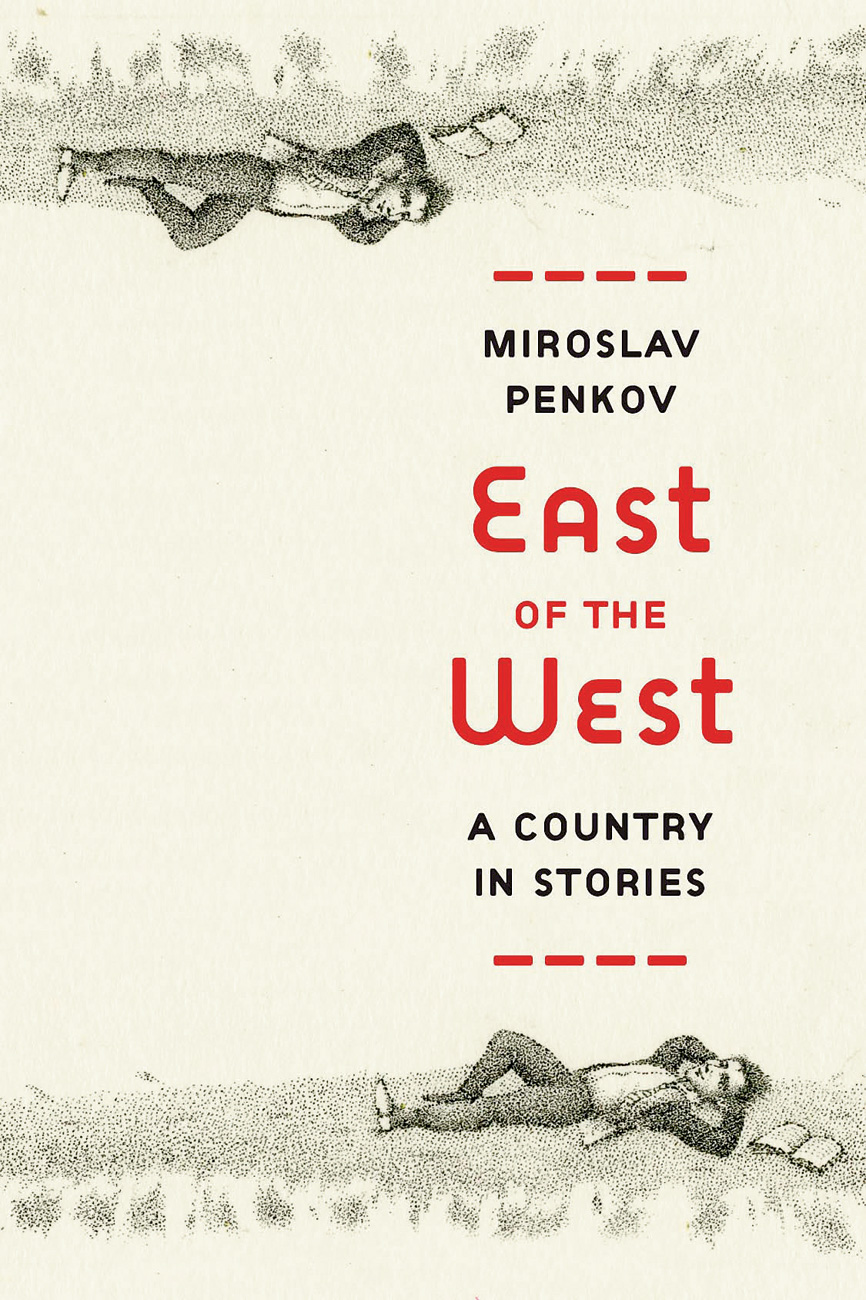
Two debuts by authors from the Balkans, both redolent of the history of the region, but quite different in tone and style.  Obreht’s novel is magical in the manner of a piece of folklore and features a picaresque cast, touching upon faded Ottoman glory, Nazi depredations and later religious strife. In East of the West, a spectrum of characters from Bulgaria – old, young, communist, Westernised -- reflect on that country’s past and how it’s affected their present. The upheavals that the area has witnessed may have redrawn the map, but, as Obreht and Penkof’s tales illustrate, myth and memory have their own contours.

Excerpt, The Tiger’s Wife: Everything necessary to understand my grandfather lies between two stories: the story of the tiger’s wife, and the story of the deathless man. These stories run like secret rivers through all the other stories of my life – of my grandfather’s days in the army; his great love for my grandmother; the years he spent as a surgeon and tyrant of the university. One, which I learnt after his death, is the story of how my grandfather became a man; the other, which he told to me, is of how he became a child again.

Excerpt, East of the West (from the story, ‘Makedonija’): I was born just twenty years after we got rid of the Turks. 1898. So yes, this makes me seventy-one. And yes, I’m grumpy. I’m mean. I smell like all old men do. I am a walking pain, hips, shoulders, knees and elbows. I lie awake at night. I call my daughter by my grandson’s name and I remember the day I met my wife much better than yesterday, or today. August 2, I think. 1969. Last night I pissed my bed and who knows what joy tonight will bring?


Recently raved about in terms that made me immediately want to procure a copy – and I’m glad I did. A delight to read, this is a series of witty, insightful episodes from the life of an acutely self-aware narrator, a pot-smoking American poet, while in Madrid on a fellowship. The question that hovers above his account of tangled relationships, attempts to write poetry and to speak in Spanish is: how does one ever fully express oneself, and is it even possible to do so?

Excerpt: As we entered the party I reminded myself to breathe....I was acutely aware of not being attractive enough for my surroundings; luckily, I had a strategy for such situations, one I had developed over many visits to New York with the dim kids of the stars: I opened my eyes a little more widely than normal, opening them to a very specific point, raising my eyebrows and also allowing my mouth to curl up into the implication of a smile. I held this look steady once it had obtained, a look that communicated incredulity cut with familiarity, a boredom arrested only by a vaguely anthropological interest in my surroundings...


LAZARUS IS DEAD Richard Beard

The story of the man famous for being brought back from the dead – told in a manner that weaves together Biblical scholarship, fictional episodes and literary references. Sounds like an unlikely amalgam, but it works wonderfully. Wholly inventive, completely new and very satisfying: you could say that Beard takes the form of the novel and, well, resurrects it.

Excerpt:  For Lazarus, in the last hour before his death, there is no miracle, no secret sign. The story as told by John abandons him, and a sequence he doesn’t understand is left, for him, unfinished: this is how death feels, and not just for Lazarus. Too soon; incomplete.


SUICIDE Edouard Leve (Trans. Jan Steyn)

An epigrammatic and haunting novella, in which the narrator reflects on the suicide of a friend. Haunting and disturbing, more so because Leve himself took his own life days after submitting the manuscript.

Excerpt: A dictionary resembles the world more than a novel does, because the world is not a coherent series of actions but a constellation of things perceived. It is looked at, unrelated things congregate, and geographic proximity gives them meaning. If events follow each other, they are believed to be a story. But in a dictionary, time doesn’t exist: ABC is neither more nor less chronological than BCA. To portray your life in order would be absurd: I remember you at random. My brain resurrects you through stochastic details, like picking marbles out of a bag.

THE TUNNEL Ernesto Sabato (Trans. Maragaret Sayers Penden)

First published in 1948, Sabato’s hypnotic novella takes us into the dark, deranged mind of a Buenos Aires artist, and comprises his prison-cell justification for murdering his mistress. The author died earlier this year, and thus, the 2011 Penguin Classics re-issue of Margaret Sayers Penden’s 1988 translation is an unintended homage. In any description of this work, there’s no choice but to use the word “existential”. (Colm Toibin’s preface to the new edition is to be found here.)

Excerpt: More than any other, however, I detest groups of painters. Partly, of course, because painting is what I know best, and we all know that we have a greater reason to detest the things we know well. But I have still another reason: THE CRITICS. They are a plague I have never understood. If I were a great surgeon, and some fellow who had never held a scalpel in his hand, who was not a doctor, and who had never so much as put a splint on a cat's paw, tried to point out where I had gone wrong with my operation, what would people think? It is the same with painting.