Sunday, June 15, 2014

We Need To Talk About Jerry

Today's Sunday Guardian column.

The spirit of J.D. Salinger still haunts us. Years after his death, there’s continuing speculation over his reclusive life and writing. Recently, there was David Shields and Shane Salerno’s Salinger, filled with scraps of information gleaned from those who knew him, not least of which was the revelation that the writer’s estate intends to release more of his work. Last month, there was the slim J.D. Salinger: The Escape Artist by novelist Thomas Beller, an account of Salinger’s life and relationships through the prism of Beller’s own sensibilities; one life refracted through another, so to speak. Now, there’s the intriguingly titled My Salinger Year, by poet and writer Joanna Rakoff.

This isn’t a tell-all account of a hushed relationship, as with Joyce Maynard’s At Home in the World. In 1996, Rakoffworked as an assistant at Harold Ober Associates, the venerable New York literary agency that represented Salinger, and this is a report of her time there, including her handling of the many fan letters addressed to the author. My Salinger Year is most of all a bildungsroman: Rakoff’s education at the agency is matched by a corresponding coming-of-age saga out of it. Slices of a vanished New York; a young woman making her way in the world; and reflections on the ways of the literati: the same ingredients are to be most recently found – albeit treated less skillfully – in Janet Groth’s 2012 memoir, The Receptionist: An Education at the New Yorker.

Rakoff’s prose is precise and evocative, revisiting and conveying the feelings experienced by her twenty-three-year-old self when adapting to the strangeness of a new job and archaic environment. It’s with the same sensitivity that she handles her after-work life: her fraught relationship with a domineering boyfriend who has socialist leanings, their efforts to rent an affordable apartment in New York, her shifting relationship with her parents, and her meetings with friends who have moved on (some of which unintentionally come across as an earlier generation’s version of Lena Dunham’s Girls).

When it came to Salinger, Rakoff’s instructions were clear from day one. After a terse “we need to talk about Jerry,” she’s told to “never, never, never give out his address or phone number….Don’t answer their questions. Just get off the phone as quickly as possible….Our job is not to bother him. We take care of his business so he doesn’t have to be bothered with it.” Fan mail was to be answered by a form letter drafted in 1963. Such missives were many: from old acquaintances, war veterans, editors and, of course, rabid fans, mainly teenagers expressing a sentiment that could be summed up as “Holden Caulfield is the only character in literature who is truly like me. And you, Mr. Salinger, are surely the same person as Holden Caulfield. Thus, you and I should be friends.” Rakoff dutifully sends off the form letters, but at times she’s unable to stop herself from sending out letters of her own, words of advice to those whose personal circumstances are oppressive. (The irony is delicious and evident.)

Rakoff also manages to speak to Salinger on the occasions he calls for his agent, during which he commends her efforts to be a poet and, being hard of hearing, refers to her as Suzanne. Their one meeting is disappointingly anticlimactic, consisting of little more than a handshake, despite “a strong and bizarre—and inexplicable—urge to hug him”.

“What really knocks me out,” Holden famously says in Salinger’s Catcher, “is a book that, when you're all done reading it, you wish the author that wrote it was a terrific friend of yours and you could call him up on the phone whenever you felt like it.” Salinger evidently evoked the same feeling in his readers because of his distinctive, intimate writing voice. Rakoff, a late convert, comes to realize just this -- “I loved him. I loved it all” -- and her memoir is an intimate, engaging account of finding her own voice. 

Sunday, June 1, 2014

Literary Potshots

Today's Sunday Guardian column.

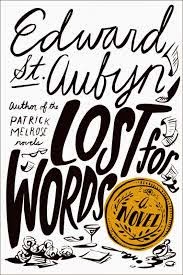
We need more satires and parodies. Everyone nowadays is far too ponderous, thin-skinned, ready to take offence: such attitudes should be skewered. When it comes to novels and novelists, too, talk is largely of the Purpose of Art, the Bold New Direction and the End of Reading, accompanied by knitted brows and weighty self-expression. The Swifts and the Waughs are consigned to the past. Into this breach steps Edward St Aubyn with his new novel, Lost for Words. This isn’t a bittersweet, semi-autobiographical saga, as with his Patrick Melrose novels, but a sharp send-up of contemporary writing and writing prizes. When it was awarded the Bollinger Everyman Wodehouse Prize for Comic Fiction last week, the news was greeted with the inevitable headline: “Novel mocking literary prizes wins literary prize.”

It’s not that the subject hasn’t been handled in fiction before: just last year, there was Howard Jacobson’s Zoo Time, a rant on the state of publishing and the bestseller list, as well as Filippo Bologna’s sardonic The Parrots, dealing with three writers vying and conniving for a prestigious literary award. Now, St Aubyn’s Lost for Words comes as another reminder that a prize can be a flawed yardstick with which to judge a book. The one in question in this novel is the Elysian Prize, clearly modelled on the Man Booker. (St Aubyn’s own Mother’s Milk narrowly failed to win in 2006, losing to Kiran Desai’s The Inheritance of Loss.) The group behind this fictional prize, dealing in genetically modified crops, is keen on a good public image; earlier, they had to face “some regrettable suicides among Indian farmers, whose crops had failed when they were sold Cod wheat, designed to withstand the icy rigours of Canada and Norway rather than the glowing anvil of the Indian Plain”.

Lost for Word’s chapters alternate between various authors, publishers and agents hoping for a favourable outcome on the night of the awards, as well as the judges and the pressures on them. One among the latter group is Penny Feathers, formerly of the Foreign Office and writer of breathless thrillers -- any resemblance to Stella Rimington, erstwhile Director General of MI5, writer of novels featuring female intelligence officers and chair of the judges for the 2011 Man Booker Prize, is not entirely coincidental.

There’s also the lordly Sonny, six hundred and fifty-third maharaja of the former Indian princely state of Badanpur, who hopes to win with his huge novel, The Mulberry Elephant. However, it’s not this book but his aunt’s palace cookbook, entered by mistake, which makes the shortlist (“fiction artfully disguised as culinary fact”) and this causes Sonny and others much heartburn. As this and other such incidents show, St Aubyn’s novel is rich in farce. His barbs are pointed and aimed at the pretentiousness of the establishment. One of the judges is all for “relevance”; another is interested in “good writing”; yet another lauds a novel by asserting that “it creates a participatory reality”.A Beckett-inspired novelist rues “art based on impact, rather than process, structure or insight” and another enjoys reading historical fiction because “one met so many famous people…like reading a very old copy of Hello! Magazine”.

Throughout, St Aubyn provides lengthy extracts from the titles on the Elysian longlist, adding to his novel’s pleasures. It can thus also be read as a handbook of pastiches, most enjoyable of which are sections from an Irvine Walsh-influenced work, “a harsh but ultimately uplifting account of life on a Glasgow housing estate”, entitled wot u starin at:  “ ‘I told yuz nivirivir to talk to uz when aymtrackin a vein,’ snarled Death Boy.”

Clearly, St Aubyn has had great fun in writing Lost for Words, which shows even in the names of agents and publishing houses (John Elton; Page and Turner). More mischievous than mean-spirited, it should be read with the same roguish spirit it displays when bayonetting its targets. 

Sunday, May 18, 2014

The Pleasures Of Being A Pedestrian

Today's Sunday Guardian column.

To take a walk in an average Indian city is to embark upon a dispiriting exercise. Broken footpaths, enthusiastic hawkers and illegal encroachments accost one at every step. Much is spent on creating new roads and flyovers to benefit those who drive, but the simple needs of those who walk, by choice or necessity, go unmet. What we lose in the process is once again brought out by Frederic Gros’s new book, A Philosophy of Walking, translated from the French by John Howe. Gros, a professor in Paris, walks in the footsteps of others who have written about pedestrianism over the years, and brings to the subject a metaphysical tone. His book deals with aspects of walking such as freedom, slowness, renewal and solitude, and touches upon its effects on noted practitioners, from Wordsworth to Thoreau, from Rousseau to Nietzsche, from Dickens to Rimbaud.

Walking is one of those capacious subjects that has always attracted writers, and has often been compared to the act of writing itself. As Robert MacFarlane has put it, “The paths are sentences, the shod feet of the travellers the scratch of the pen-nib or the press of the type." Though many books on ambulation have a common core, they go on fascinating rambles, depending on the inclinations of the writer. Rebecca Solnit’s Wanderlust: A History of Walking, for example, an individual and sometimes dizzyingly dense look at the topic, informs us of the layout of gardens, the nature of literary criticism, the pursuit of mountaineering, the development of American suburbs, the origins of streetwalking, and the perceptions of women in public spaces. Others pursue different paths:  in Geoff Nicholson’s The Lost Art of Walking, there’s an entire chapter on walking in music and movies, referencing an episode of Bob Dylan’s radio show, medieval troubadours’ chansons d’aventure, Robert Johnson’s ‘Walkin’ Blues’, Charlie Chaplin’s signature shuffle and John Travolta’s Saturday Night Fever strut.

Gros, however, keeps to the straight and narrow for the most part. Walking is not a sport, he asserts, not subject to the competitive fervor that pervades so much of how we spend our time today. “It’s a process of self-liberation,” he writes; while ambling, “you feel free, because whenever you remember the former signs of your commitments in hell – name, age, profession, CV – it all seems absolutely derisory, minuscule, insubstantial”.

Much of A Philosophy of Walking deals with walking in the countryside, although the particular charms of walking in the city are also considered. It’s here, of course, that one comes across the figure of the flâneur, the solitary urban walker and lounger, much analysed, written about and used as a subject for fiction, from Charles Baudelaire to Walker Benjamin, from W.G. Sebald to Teju Cole. “City, crowd, and capitalism” are the conditions that give rise to such a person, writes Gros. The flâneur’s solitude, anonymity and slowness, the fact that he’s not caught in a “web of exchanges”, contrasts with the city’s capitalistic hustle and bustle; thus, “he subverts the crowd, the merchandise and the town, along with their values”. (No wonder it’s difficult to take a walk here.)

Gandhi is another famous walker whom Gros devotes time to, in particular the former’s Dandi March as well as his trips on foot to riot-ravaged areas before Partition. “Walking with Gandhi,” he writes, “nurtured the slow energies of endurance”, something else that we don’t seem to have time for nowadays. Elsewhere, Gros comments on supplicants on their way to Pandharpur chanting Sant Tukaram’s songs, underlining yet another role of walking, that of being an essential activity on pilgrimages.

Gros can sometimes be a bit precious in his pronouncements, such as when he says: “even when I am alone, there is always this dialogue between the body and the soul”. Overall, though, A Philosophy of Walking is knowledgeable and bracing. One feels like thrusting a copy upon our urban planners to make them realise that the activity is more than pedestrian.

Sunday, May 4, 2014

Dictators And Memories

Today's Sunday Guardian column.

Dictators hate memories.  History can be rewritten, dissent can be suppressed, but remembrance cannot be so easily eliminated. Many such memories, collective and individual, have provided fodder for novelists. In Latin America, there’s a long tradition of what’s called “the dictator novel”, in which real and fictional leaders are scrutinised, criticised or lampooned – notable among them Augusto Roa Bastos's I, the Supreme, Ramón del Valle-Inclán’s Tyrant Banderas, Alejo Carpentier’s Reasons of State, not to mention work by those such as Gabriel Garcia Marquez and Mario Vargas Llosa.

This tradition of looking back at a troubled past lives on, with contemporary novelists trying to understand the role of their countries’ previous generation. Last year alone, there was Juan Carlos Vasquez’s The Sound of Things Falling, examining the recent drug-addled history of Colombia. There was Alejandro Zambra's Ways of Going Home, looking back at Pinochet’s Chile. And there was Patricio Pron’s My Fathers’ Ghost is Climbing in the Rain, which explores the lasting effects of Argentina’s last military dictatorship.

Pron’s novel is unconventional and memorable because of its style and structure. “Children are detectives of their parents, who cast them out into the world so that one day the children will return and tell them their story so that they themselves can understand it,” he writes, summing up this tale of a young Argentinian writer returning home.

The narrator, in Germany when the novel starts, travels back to Argentina upon hearing of his father’s sudden illness. He is a blocked and depressed writer, irresponsible, addicted to pills, besieged by dreams and distractions. Thus, the novel proceeds in very short chapters, with -- in the translation by Mara Faye Lethem -- long, looping sentences that carry the weight of thoughts as they take shape.

Once home, the writer spends much of his time visiting the hospital, watching movies on TV with his siblings, making lists of his parents’ books and, of course, taking his pills. His journey from numbness to awareness begins when he comes across a folder on his father’s desk containing several newspaper clippings as well as other details related to the recent murder of one Alberto Burdisso, “a Faulknerian simpleton” employed by a local club.

A section is now almost entirely given over to the reports in the folder, with people, places and proceedings laid out in meticulous detail, after which the narrator pieces together the reasons for his father’s interest in the case, as well as its connection with an earlier murder in his country’s history: “Nobody had fought, we had all lost and barely anyone had stayed true to what they believed, whatever that was, I thought; my father’s generation had been different, but, once again, there was something in that difference that was also as meeting point, a thread that went through the years and brought us together in spite of everything and was horrifically Argentine: the feeling of parents and children being united in defeat.”

It is towards the end that Pron reveals the reason for the novel’s mode of enquiry: the events of the book, he writes, are “mostly true”, although “some are the result of the demands of fiction, whose rules are different from the rules of such genres as testimony or autobiography”. Which of course leads one to ask, why not write it as testimony or autobiography instead? The answer is that by writing it as a novel, Pron can combine an individual sensibility, an interior life, with a larger historical context, and give the whole a shape that has a greater heft.  The result is a narrative in which “I would have to be both author and reader, discovering as I narrated”.

One of the writer’s tasks is to bear witness – to his or her own stories, to the stories of those close to them – and to record testimonies in the best way possible. In My Fathers’ Ghost is Climbing in the Rain, that is what Patricio Pron has admirably done.

Sunday, April 20, 2014

Best Served Cold

Today's Sunday Guardian column.

One of the more commented-on aspects of Roman Polanski’s Rosemary’s Baby was the decision to never show the face of the said baby. Rightly so, for dread, when left to the imagination, is more palpable than when every detail is depicted. This is what comes to mind when reading Yoko Ogawa’s Revenge, a collection of 11 dark tales, translated from the Japanese by Stephen Snyder. Ogawa’s stories don’t depend on the satanic, but on the malevolent forces that lurk in the heart of the everyday.

Revenge is one of the six titles on the recently-announced Independent Foreign Fiction Prize Shortlist, an award that recognizes the author as well as "the importance of the translator in their ability to bridge the gap between languages and cultures".  For the first time, two female writers from Japan appear on the list, the other being Hiromi Kawakami for Strange Weather in Tokyo (which appears to be a Murakami-style meditation on love and loneliness).

The particular eeriness of Ogawa’s interlinked tales comes from the contrasts between the subject, her quiet language and the unhurried release of information. Her characters are people whom life has pushed to the margins: an unassuming student whose mother is dying of cancer; an unfairly jilted beautician; a wife separated from her family and trying to be a writer; a mother who’s dealing with the loss of her young son. In many cases, the stories have a similar structure, first person narratives that start with a period of waiting – on a train journey, in a bakery, in a hospital – which is then intercut by distressing memories from the past.

The linkages between them are ingenious and carefully structured. In one story, we read of an abandoned post office filled with kiwifruit, an oddity explained by the actions of a character in the next. In another, a character throws a dead hamster into the trash, spotted by another in the tale that follows. Sometimes, characters are linked by location, as when one of them speaks to her boyfriend of a murder in the flat above, an incident that forms the submerged climax of another story. In yet other cases, a story is revealed to be one that’s written by an earlier character.

Ogawa’s metaphors go a long way in adding to the oddness. Most of them are drawn from routine objects and sounds: a mis-struck violin is “like the cry of a small bird”; a carrot is “in the shape of a hand”; a laundry cart rolls down a corridor “as though pushed by an invisible hand”; a dried-up plum emerging from a pocket “looks like a testicle”. (Ouch.)

A passage in one of the stories, during which a bag-maker muses on her profession, could well be a metaphor for Revenge’s act of creation. When she makes a bag, she says, she first pictures how it will look when it’s finished. Then, she sketches each imagined detail, “from the shiny clasp to the finest stitches in the seams”.  Next, “I transfer the design to pattern paper and cut out the pieces from the raw material, and then finally I sew them together”. As the bag takes shape, “my heart beats uncontrollably and I feel as though my hands wield all the powers of the universe”.


The bag-maker’s story, arguably the most chilling of the lot, moves away from the quotidian and exists at an angle to reality. She’s depicted as obsessed by one of her customers, a nightclub crooner who, because of a congenital defect, has her heart outside her chest. Another such story portrays the curator of a domestic museum of implements used for torture, who cares for a Bengal tiger in his garden.These are exceptions that veer towards the fantastical, but what is common to the collection lies in the words of a character who, when conversing with another, notices the “icy current running under her words”. The iciness of Ogawa’s vision reinforces the old saying that revenge is a dish best served cold. 

Sunday, March 30, 2014

Now, A Reading App That Does Away With Reading

Today's Sunday Guardian column.


There’s been much chatter of late about a new app that promises to increase reading speeds. Claims are being bandied about that from an average of 250 words per minute, this app can make you reach up to 1,000 words – about four times as fast. There’s no need to quail anymore, enthusiasts say, at the sheer bulk of books such as War and Peace or Infinite Jest, which can now be finished in a day.  One imagines librarians across the land groaning at the increased rate of borrowings from the stacks.

What has been a closely-guarded secret until now, however, is that another app is being developed that takes speed-reading a huge step further by eliminating the need to read at all. After all, these developers say, why bother with mundane details when you can – in their words – think out of the box while pushing the envelope?

Understandably, the developers don’t want to release too much information at this stage, as they’re wary of competitors latching on to the same formula. However, this columnist has managed to unearth some particulars of their venture, which is radical in the extreme. I’m legally bound not to reveal all of the details, but suffice to say that the world of books and reading will never be the same.

What I can report is that, as with all works of genius, this one has simplicity at its heart. In essence, their plan is to eliminate the need for a person to measure reading speeds and eye movements simply by having the books read out to him or her. As the company’s vice-president said, “The ear is the new eye”. Those who think that this is just a rehashed version of an audiobook could not be more mistaken.

Once downloaded onto your smartphone, HearHere, as the app is called, will store details of your location and offer a menu of titles. All you then have to do is to tap your choices onto it, and you’ll receive an address and time where one of the titles is to be read out in public. Such venues are typically campfires, riverbanks, town squares and other such open spaces. Here, a group of like-minded people will assemble to listen to a trained representative of HearHere, called “a Storyteller”.

The initial plan is for such Storytellers to recite titles from mainstream and genre bestseller lists: thus, on any given evening, there would be a wide-eyed group listening to tales of the many shades of grey, whereas elsewhere, they would be enthralled by robots overtaking humans, or thrilled by locked-room mysteries.  This revolutionary new step, the developers claim, also decreases the waste involved in a single book being read only by one person at a time. (“It’s a Multiplier Effect”, one of them said.)

HearHere’s founders don’t plan to stop here. Once the stock of titles that people want to listen to start to dwindle, they intend to coach their group of intrepid Storytellers in order to take it up a notch. In this phase, they will start to riff on subjects such mythical battles between champions and demons, the origins of the universe and our place in it, local legends of love and loss, and so on. In passing, this is also the basis of HearHere’s business plan: companies can sponsor such tales and have their products woven into them. For example, a detergent manufacturer could sponsor a folktale of a washerman’s donkey, and cleverly imply that you’re an ass if you don’t use washing powder. Ingenious.


When I asked one of HearHere’s founders how their scheme differed from age-old pre-literate storytelling activity, he bristled. “There’s all the difference in the world!” he spluttered, taking a few sips of his hazelnut latte. “You see, in the past they simply recited stories. Now, we plan to simply recite stories – by using an app!” Refusing his offer of another latte, I returned home, marvelling at the uses of 21st century technology.

Saturday, March 22, 2014

In An Antique Land

This review appeared in today's The Indian Express

At one point in Kamila Shamsie’s new novel, A God in Every Stone, a character writes to another to say: “All these stories which happened where we live, on our piece of earth -- how can you stay immune to them?” Bringing such stories to light to examine history’s long shadow is what the novel sets out to do, as indeed was the case with her earlier Burnt Shadows. That novel encompassed events from the Hiroshima bombing to India’s Partition to 9/11; similarly, A God in Every Stone yokes together events separated by decades through their cumulative impact on individuals affected by them.

Given the emphasis on history, it’s apt that the work of a man known as that discipline’s father plays a large role here. In his Histories, Herotodus mentions Scylax, an intrepid Greek explorer who is supposed to have followed the course of the Indus down to the sea. Scylax’s exploits in particular, and archaeology in general, hold a special fascination for Vivian Rose Spencer, a young, spirited and impressionable Englishwoman who, when the novel opens in 1914, is on an archaeological dig in present-day Turkey. Shamsie’s counterpoint to Vivian is Qayyum Gul, a Pathan from Peshawar who is among the first soldiers of the Indian Army to arrive in France, subsequently being injured at the ill-starred Battle of Ypres.

Vivian and Qayyum, as yet unknown to each other, return to their families in London and Peshawar respectively, and other characters are brought in, notably Qayyum’s younger brother, Najeeb. When Vivian turns up in Peshawar in quest of a lost artefact of Scylax, she finds echoes of Kipling everywhere; she also discovers and then nurtures Najeeb’s own budding interest in archaeology, playfully nicknaming him “the Herotodus of Peshawar”. The stage is almost set for the novel to advance towards the other event that it brackets: the infamous confrontation between British troops and non-violent protestors at Peshawar’s Qissa Khwani Bazaar -- or Storyteller’s Street – in 1930.

Shamsie doesn’t let the weight of all this history get in the way of depicting her characters’ inner lives, rendering them as interesting and absorbing. Her prose is fluid and sensorial, especially when it comes to depicting the sights and sounds of Peshawar, without tipping over into the florid (as with compatriot Nadeem Aslam).

However, given the framework of interactions between characters from different worlds, the action, at times, does largely depend on coincidence. Such are the treacherous currents of an intricate plot, and novelists often have to work hard to keep their characters afloat. (Again, Shamsie’s Burnt Shadows had a similar reliance on happenstance, a cheeky acknowledgement of which can be found in the words that one character in that novel tells another: “Both times you've entered my home it's been nuclear-related. Once was acceptable; twice just seems like lazy plotting”.) While that may be an acceptable and not lazy strategy, it turns out that Shamsie also introduces new characters with defining and almost phantasmagorical roles very late in the narrative, and this does come across as over-egging the pudding.


Another way of reading the novel would be to see it as a series of choreographed exchanges between counterparts. In its pages, there are journeys to the West and expeditions to the East; World War I engagements and Peshawar riots; a chaotic, walled city and its orderly cantonment; Western notions of history and local legends that fill the air in the Street of Storytellers; an embittered Pathan soldier and a naïve Englishwoman both seeking means of fulfillment; Khan Abdul Ghaffar Khan’s non-violent protests and brutal colonial retribution; and the rose-scented intensity of attar contrasted with the mellow fruitfulness of autumn. Such a pas de deux of opposites is everywhere, and it is skillfully done. It is this, along with Shamsie’s empathetic view of characters caught in history’s undertow, that are the defining and often pleasing features of A God in Every Stone.

Sunday, March 9, 2014

Tolstoy Reports From Crimea

My Sunday Guardian column.

Over one-and-a-half centuries ago, a young Russian aristocrat racked with gambling debts enlisted in the army. A few years later, as a second lieutenant in the artillery, he arrived in Sevastopol, a strategic fort then under siege by the British, French and Ottoman armies, the loss of which proved to be the final episode of the Crimean War.

His experiences in Crimea provided the 26-year-old Lieutenant Tolstoy, already in the grip of literary ambition, with fodder to write three fictionalized accounts set in the Black Sea port during the blockade. It's because of these that he's sometimes referred to as the first modern war correspondent. In a paragraph from the second sketch that was censored when first sent for publication, Tolstoy’s as-yet budding pacifism comes to the fore. “One of two things appears to be true,” he writes. “Either war is madness, or, if men perpetrate this madness, they thereby demonstrate that they are far from the rational creatures we for some reason commonly suppose them to be”.  We’re still far from realising the truth of those words.

All three pieces first appeared in a reputed St Petersburg journal in 1855; they were later collected under the title, The Sebastopol Sketches. His incipient attitudes towards armed conflict apart, they also provide a foretaste of literary talent. (The Crimean War has other literary echoes, the most well-known being Tennyson's thundering The Charge of the Light Brigade.)

In the sketches, one can find Tolstoy trying to come to grips with his feelings when he sees at first hand the confrontation between notions of nationalistic pride and the reality of carnage. Death is a commonplace in Tolstoy’s Sevastopol: it arrives unexpectedly, yet is treated in an everyday manner. The wounded and the limbless recover from and reflect upon their experiences; others at the front display attitudes that range from the courageous to the boastful to the cowardly.

The first sketch is in the second person, addressed to a newcomer to Sevastopol. Here, Tolstoy writes, you will “witness spectacles both sad and terrible, noble and comical, but which will astonish and exalt your soul”. There are further contradictory experiences: despite a conviction that “the strength of the Russian people cannot possibly ever falter”, you will see “fearsome sights that will shake you to the roots of your being; you will see war not as a beautiful, orderly and gleaming formation, with music and beaten drums, streaming banners and generals on prancing horses, but war in its authentic expression -- as blood, suffering and death”.

In the second sketch – which ran afoul of the Russian censors – more doubts emerge, often couched in irony. This alternates between the fortunes of fellow officers during the conflict, revealing behaviour that’s often vain and haughty. One officer is “infected by that painful excitement that is commonly experienced by onlookers who are confronted by the outward manifestations of battle at close quarters but are not taking part in it”.  Elsewhere, “the soldier who has been wounded in action invariably believes the battle to have been lost with fearful carnage”. The real hero of the tale, Tolstoy adds, “is truth”, which “will always be supremely magnificent”.


The last is the most personal of the lot, dealing with the actions and sacrifices of two brothers -- one sensitive, the other boisterous -- during the siege. One can detect the character of the writer in the younger brother, especially when “he was going to have to endure much mental anguish if he was to become the man, patient and calm in toil and danger, who constitutes our generally accepted image of the Russian officer”. In the shadow of constant shelling by the enemy, the port has been transformed into “this terrible place of death”, yet he can see “beautiful, festive, proud Sebastopol surrounded on the one hand by yellow, misty hills and on the other by the bright blue sea, sparkling in the sun”.  All these years later, that beautiful and festive city is once again under threat.

Thursday, February 27, 2014

"One Of The Few English Novels For Grown-Ups"

This appeared in the latest issue of the Sunday Guardian -- although, by mistake, under a different byline. 

When I first read George Eliot's Middlemarch, the question I asked myself was: what makes it a novel? There's a profusion of characters of various ages and backgrounds, facing different predicaments, many of whom never meet, with parallel, sometimes interlocking narrative strands. On the other hand, if, as the novel's subtitle has it, it's meant to be a study of English provincial life, why the emphasis on Dorothea Brooke, commonly held to be the novel's heroine?  This reaction seemed a faint echo of Henry James’ own mixed admiration for the novel:  it was “a treasure house of detail”, but “an indifferent whole”.

One of the answers to the question of what holds it together, I later realised, is that of a distinct sensibility. Eliot, with her famous authorial interjections and empathy for all her characters, was tying the whole together with a magisterial understanding of what it means to be human, with human yearnings that are satisfied -- or not.

One of the satisfactions of reading New Yorker writer Rebecca Mead's new book on Eliot's novel is that it delves into this answer, and offers many more besides. My Life in Middlemarch is Mead's investigation into Middlemarch’s origination and conception, and the ways in which it intersects with her own life. It’s a beguiling combination of a devoted reader's analysis, explorations into Eliot’s life and relevant vignettes from Mead’s own experiences. Fittingly, the book’s structure mirrors Middlemarch itself.

As Mead reminds us, the novel was an amalgamation of two ideas that Eliot separately toyed with: the first, a study of provincial manners, and the second, simply called “Miss Brooke”. Bringing them together, she created a master-work, a clever inversion of the marriage plot that was “arresting in the acuteness of its psychological penetration and the snap of its sentences”, with, as Eliot wrote, “tolerant judgment, pity and sympathy” extended to every character.

The most famous thing ever said about Middlemarch was Virginia Woolf’s observation that it was “one of the few English novels written for grown-up people”. It’s a statement that Mead unpacks, concluding that what Woolf meant, perhaps archly, is that it’s for “those who are old enough to appreciate the artistic representation of failure rather than success.”

Mead reads Eliot’s diaries and letters, visits the author’s childhood house and walks the streets that she herself would have walked, in Coventry, London and Oxford, among others. She explains the ways in which Eliot’s life shaped her fiction, and how her fiction shaped her, detailing the effort required for Mary Ann Evans to turn herself into George Eliot. (She also speculates on the origins of the characters: were Casaubon and Dorothea based on the Rector of Lincoln and his wife? How much of Lewes, the man Eliot lived with, was there in Ladislaw?)

My Life in Middlemarch is also a paean to re-reading: “The novel opened up to me further every time I went back to it.” Through episodes from her own life – moving from the provinces to the city, affairs, marriage, children – Mead highlights how Middlemarch provided revelation at every stage: “The questions with which George Eliot showed her characters wrestling would all be mine eventually. How is wisdom to be attained? What are the satisfactions of personal ambition, and how might they be weighed against ties and duties to others? What does a good marriage consist of, and what makes a bad one? What do the young owe the old, and vice versa? What is the proper foundation of morality?” From an immersive identification with Dorothea, Mead moves on over the years to appreciate and sympathise with the other characters, Lydgate, Ladislaw, Rosamond, Fred, Mary and even Casaubon. As she puts it, the book was reading her as she was reading it.


Mead’s assessment of this “home epic”, then, shows how Eliot draws us deep into her fictional panorama and “makes Middlemarchers of us all”. In answering the question I put when I first read it, it makes me want to return to Middlemarch myself.

Sunday, February 9, 2014

One Of Marquez's Heirs

Today's Sunday Guardian column.

To the world, Gabriel Garcia Marquez still remains Latin America’s best-known writer, One Hundred Years of Solitude his best-known work, and magic realism his best-known style. Since that novel appeared, however, a new generation of authors has sprung up, one that has forsaken fabulist narratives but is as uncompromising in the search to tell stories that capture their region’s history.

One of the best examples is that of fellow-Colombian Juan Gabriel Vasquez. In an earlier novel, he mischievously has the narrator tell us: “This is not one of those books where the dead speak or where beautiful women ascend to the sky, or priests rise above the ground after drinking a steaming potion”. Clearly, despite the author’s stated admiration for One Hundred Years of Solitude -- one of the books that he says made him want to become an author – a new approach was necessary.

Vasquez’s recent The Sound of Things Falling, translated by Anne McLean and the third of his books to be available in English, is a perfect illustration of his concerns and technique. “No one who lives long enough can be surprised to find that their life has been moulded by distant events, by other people’s wills, with little or no participation from their own decisions,” thinks the narrator of The Sound of Things Falling, and the novelist sets out to unpack this statement in the context of his country’s recent history.

The narrator, a law professor in Bogota, tells of his encounters with one Ricardo Laverde at a billiards parlour, and of how these chance meetings lead to an event that will transform him. We learn bits and pieces of his own life – romance, marriage, fatherhood – and this deftly segues into the heart of the book, a reconstruction of the life of Ricardo himself, revealed as an aspiring, morally compromised pilot taking advantage of his country’s dubious opportunities; and of his wife Elena, an impressionable Peace Corps worker from the United States sucked into the vortex of current events. All of them fall prey to “the violence whose actors are collectives and written with capital letters: the State, the Cartel, the Army.”

A presence that pervades the novel – as it does Colombia’s recent past – is that of Pablo Escobar and the continuing havoc that his actions have wrought. To drive home the point, The Sound of Things Falling opens with an escaped hippo from Escobar’s private zoo in Hacienda Napoles, a place that the narrator and Maya, Laverde’s daughter, re-visit near the end. At one point, the latter wryly says: “We have an abnormal relationship to Bogota. Being there through the 80s will do that to you.”  Later, the narrator himself observes: “One day I’d like to find out how many of them were born as Maya and I were at the beginning of the 1970s, how many like Maya or me had a calm or protected or at least unperturbed childhood, how many traversed their teenage years and fearfully became adults while the city around them sank into fear and the sound of gunshots and bombs without anyone having declared any war, or at least not a conventional war, if such a thing exists.”

Vasquez also grounds his narrative in other historical events that have scarred his country: the 1938 aircraft accident during a ceremony to mark the founding of Bogota is one such, cross-matched by another air disaster, that of the American Airlines flight in 1995. Other temporal markers are provided by, among others, conversations about Nixon, Ho Chi Minh and the Sea of Tranquility.

In a Washington Post interview, Vasquez has said, “I realized that the fact that I didn’t understand my country was the best reason to write about it — that fiction, for me, is a way of asking questions. I think of it as the Joseph Conrad approach: You write because there’s a dark corner, and you believe that fiction is a way to shed some light.” This is exactly what he– thrillingly, arrestingly – has done in his new novel.