Sunday, February 19, 2012

Shackled

This appeared in yesterday's The Indian Express

THE PRISONER OF PARADISE Romesh Gunesekera


Naïve young men and women. A bespoiled Eden. And lost innocence. That’s what Romesh Gunesekera’s first novel, Reef, was made of. With The Prisoner of Paradise, he returns to the same elements, this time with middling results.

The novel is set in the Mauritius of 1825, less than two decades after the French ceded the island to the British. On this land arrives the orphaned 19-year-old Lucy Gladwell, wanting “much more from the world than could be found within England's pebbly shores”. She’s to stay with her aunt and uncle, the latter being a Colonel Blimp-ish colonial administrator, very much a stock character.  (Lucy’s circumstances are thus markedly different from those of Deeti, who, in Amitav Ghosh’s River of Smoke, also arrives in Mauritius in the early decades of the 19th century to start a new life.)

With her secluded, poetry-steeped upbringing – Thomas Moore’s Lalla Rookh being a favourite – Lucy is initially charmed by “this sunny southern island bursting with colour and full of the sounds of singing and buzzing, gurgling and rustling, whistling and whispering…” Must have been difficult to sleep at night.

Soon, she meets and is attracted to the Darcy-like Don Lambodar, a suave, saturnine translator at the service of a rebellious princeling from Sri Lanka. But this is an island -- peopled by those from India, England, France, Mozambique and Sri Lanka, among others -- that, in the words of Lambodar, “the French emancipation failed to reach and the English abolitionists have yet to discover”. Soon, there are rumblings in paradise: disaffection spreads amongst the indentured plantation workers and others over the construction of a temple, as well as their overall circumstances. Natural and man-made storms will ensue, and lives will be overturned.

There’s certain obviousness to much of the material – Wide Sargasso Sea, this isn’t -- and many of the events occur offstage, being subsequently recounted by witnesses in the form of long conversations. This isn’t helped by stilted dialogue, even if you take into account the attempt to mirror earlier speech patterns. The prose, too, can veer towards the overheated: “He thought he was conducting a conversation, but discovered it had turned into a quarrel of silence with pauses and peripeteia of peculiar proportions”. A little later, flowers are revealed to be "sucking the morning sun into their dewy delicate tubes and releasing faint undulating vapours..."

What does come through, however, is Gunesekera’s earnestness in unfolding the narrative, as well as the sincerity with which he conveys the depth of feeling between Don and Lucy. Other than that, Prisoner of Paradise is too shackled to satisfy.

Saturday, February 11, 2012

Posters For #flashreads


Some rough-and-ready posters for use on February 14: e-mail, display, put up on your blog or print and wrap fish in them. For the initiative itself, see this.

(Update: Have added two new posters. These are the last ones, I promise.)


Monday, February 6, 2012

Ravan And Eddie Redux

This appeared in the current issue of Tehelka.

THE EXTRAS Kiran Nagarkar


Like the city in which it is set, Kiran Nagarkar’s The Extras is bursting at the seams, with a crumbling infrastructure. This is a high-spirited follow-up to his 1975 Ravan and Eddie, and features the eponymous duo bobbing and tumbling like corks in the slipstream of Mumbai in the 1960s.

The narrative follows the two, now young men, as they set out to make something of their lives. As before, there are descriptions of lives across communities in the Central Works Department chawl in Mazgaon, segueing into a series of rambunctious episodes in which they encounter policemen, film folk, underworld dons and more.

From working in a speakeasy – a so-called ‘Aunty’s Bar’ --  to playing in wedding bands to driving taxis and ultimately hoping for success as extras in Bollywood, Nagarkar intertwines their lives, even though they begin to interact only in the book’s latter half.  As Eddie’s girlfriend puts it: “You seem to know each other's moves and you play off each other. There's some kind of rivalry and edge, and yet there's respect and you never cross the line”. We learn of Ravan and Eddie’s varying passions for physical fitness, music and acting – all of which will come to their aid towards the end – and the women in their lives. In this manner, the tale moves all over Mumbai and its environs, from Bhendi Bazar to Bandra, from Karjat to Colaba.

As with Ravan and Eddie, the narrative is interspersed with mini-essays on Mumbai life, this time on subjects such as the “brass bandwallahs”, taxi-drivers, Prohibition and a modest proposal to replace the system of education with private coaching classes. For the most part, these are entertaining little  riffs, although in some cases, such as when Nagarkar dwells on the rise of Mumtaz and Rajnikanth, the facts are so well-known that one wonders what the point is. (Perhaps one ought to heed the advice offered at the start of one of these ruminations:  “No extra charge if you jump to the main story a few pages later”.) A little later in The Extras, the narrative is also interspersed by lengthy song lyrics and letters, making it more self-indulgent than necessary.

With trademark irreverence, Nagarkar also takes potshots at established pieties. There’s a Maiboli Sangh, for example, trying to whip up Maharashtrian passions; elsewhere, Ravan muses that national integration can be truly seen on Falkland Road, the city’s red light district, as there were women from all states to be found there.

With its surfeit of highs and lows and occasionally too-convenient succession of entrances and exits, the continuing adventures of Ravan Pawar and Edward Coutinho turn out to be sometimes bawdy, sometimes implausible and almost always engaging.  As with a series of dishes on a long buffet table, it’s enjoyable to make your way through, but can also leave you too sated for comfort.

Sunday, January 1, 2012

15 Literary Predictions For 2012

This appeared in today's DNA.


The jury's out on whether the Mayan prophecy of the world ending in 2012 will come to pass. If we're still standing this time next year, here are fifteen predictions related to books and publishing that we’ll have to endure.

1 Passions will run high with the discovery of a manuscript in Steig Larsson's study entitled The Girl Who Served My Coffee Cold. It will later be discovered that this is not an unpublished novel, but a long rant against a tardy waitress at a nearby cafe.

2 Shops known as "bookstores" will start to stock seasonal vegetables, readymade garments and sports goods, apart from DVDs, CDs, video games, watches, jewellery and stationery. As this will leave no space for books, they will be available by special request only.

3 The spate of books and articles on Steve Jobs will cease once people realise that many of those writing about him were simply repeating the same thing. Matters will come to a head once it is discovered that a much-linked-to blog post titled "My Recollections of Jobs" simply consists of the words "Stay hungry, stay foolish" typed over and over again.

4 After the furore over the proscribing of A.K. Ramanujan's essay on the Ramayana by Delhi University, members of the varsity's Physics Department will seek to stop the study of quantum physics, claiming that "some German fellow called Heisenberg" was out to promote uncertainty across the nation.

5 Shah Rukh Khan's 37-kg "opus" will cause bookshelves and coffee tables across the nation to splinter and collapse under its weight. The MNS will subsequently stage a series of protests in front of furniture showrooms, claiming that this has offended the sensibilities of those carpenters who are not SRK fans.

6 Adam Mansbach, author of the sleeper hit, Go The F*ck to Sleep, will repeat his success with Who Gives A Sh*t, a potty-training manual.

7 Salman Rushdie's memoir of the fatwa years will attract controversy, as detractors will claim that there's nothing whatsoever in the book to cause offence to any community, and the author is thus depriving people of a chance to protest. Rushdie will claim that this is untrue and as proof, he will protest against Pankaj Mishra's review in Outlook.

8 Amitav Ghosh will ridicule reports claiming that the third volume of his Ibis trilogy, after Sea of Poppies and River of Smoke, will be titled Stream of Consciousness.

9 Zombie and vampire mash-ups will gain popularity in India too, with works such as A Suitable Werewolf and The Three Banshees of My Life. However, V.S. Naipaul will haughtily turn down requests to publish A House For Mr Nosferatu and India: A Million Monsters Now. Subsequently, Paul Theroux will write another memoir accusing Naipaul of racism towards the undead.

10 The Man Booker judges will cause consternation when they include Rujuta Dawekar's Women and the Weight Loss Tamasha on their longlist. The title will subsequently be withdrawn when it's pointed out that it's not a work of fiction. "But it was so readable!" one of the judges will be heard to comment.

11 Chetan Bhagat will once again feature on bestseller lists with his non-fiction work, The Grammatical Mistakes of My Life. Here, he will claim that he's never written in English, but a local Indian dialect instead; therefore, criticism of his poor handling of the language is misplaced. Translators will be summoned to render all his previous work into English.

12 Street food vendors will stay off Indian roads to protest against the declining sales of newspapers and magazines. When lauded for their attempts to promote reading, the president of the vendors' association will say: "Reading-shmeading. We only want to make sure there's no shortage of plates and wrappers."

13 Amazon will introduce a sleeker version of the Kindle Fire, to be named the Kindle Lighter. After disappointing sales, this will unkindly be dubbed, "the Dwindle".

14 Literary festivals will be organised every weekend, with the latest addition being that of the Nallasopara Panchayat's Write Stuff Carnival. ("Books! Celebrities! Candy Floss!") Organisers of such festivals will soon run out of authors, and will therefore introduce public readings from shopping lists, classroom notes and telephone directories. The number of such soirees will decline once the government, waking up to their popularity, imposes a 55% tax on all literary activity.

15 British betting agent Ladbrokes will claim that one Hans Castorp from Hamburg is the frontrunner for the literature Nobel. Wikileaks will reveal that Castorp is actually a fictional character from Thomas Mann’s The Magic Mountain, and in an attempt to salvage its reputation, a Ladbrokes spokesperson will scoff, "You mean the other laureates were real people?"

Lost In The Middle Kingdom

This appeared in yesterday's The Hindustan Times

THE YELLOW EMPEROR'S CURE Kunal Basu


Novels, like human beings, sag in the middle. Between the set-up and the denouement falls the shadow, as Eliot would have phrased it.  Some novels, in fact, never quite recover from this tapering off of tension as they progress. It is into this category, alas, that one must place Kunal Basu’s The Yellow Emperor’s Cure.

Earlier this year, both David Mitchell and Amitav Ghosh published novels based in earlier centuries where characters are changed by coming in contact with a walled-off Orient. In Mitchell’s The Thousand Autumns of Jacob de Zoet, a young Dutch book-keeper falls in love in 18th century Japan; in Ghosh’s River of Smoke, the second in his Ibis trilogy, a bevy of characters, primarily an opium trader from Bombay, confront their destinies in 19th century Canton. Basu’s new novel, too, charts the fate of an European in late 19th century China – although it must be said that the author, better known for his moving short story, The Japanese Wife, has dealt with similar subjects almost from the start of his writing career, as evidenced by 2001’s The Opium Clerk.

The Yellow Emperor’s Cure deals with the travails of young Portuguese surgeon Dr Antonio Maria, possessed of “the most precious pair of hands in Lisbon”. In the words of his friends, he’s “rock steady with the scalpel, but a prize idiot when it comes to women”. The good doctor is shaken out of carousing at the Lisbon festa with the news that his beloved father has been stricken by the then-untreatable syphilis. He resolves to travel to China to find a cure for the “French Disease, Spanish Itch, German Rash or Polish Pox -- it was the same old curse Dom Columbus had brought home from Hispaniola along with gold and talking parrots”.

After a brief stint in Macau, Antonio ensconces himself at the summer palace of the Dowager Empress, adjacent to Peking. Here, he learns of the yin and yang of traditional Chinese medicine under the tutelage of the mysterious Dr Xu in a period when, as his friend tells him, "The grand libraries of Florence and Paris, London and Heidelberg, contain all that's known to mankind. We Europeans know as much as there is to know about the yellow race, more than they know about themselves!" Soon enough, in the time-honoured manner of Europeans before and after him, Antonio is quickly entranced by the enigmatic Fumi, Dr Xu’s assistant, a woman with a chequered past.

The doctor from the west has the misfortune to be in China at the time of the so-called Boxer Rebellion, the incipient nationalist uprising opposed to foreign influence.  The Boxers, one of the characters breathlessly asserts, are "...spirit soldiers, a ragtag bunch of bumpkins passing themselves off as god-sent saviours of China. There are eight million of them, or so they say, each capable of flying in air and spitting fire, immune to bullets and bombs”. The uprising will bring secrets to light and have defining consequences for Antonio and his compatriots.

Basu is adept in conveying locale, background and customs, be they of Lisbon’s bustling streets, the hubbub of Macau or the imperial courtyards and crowded marketplaces of Peking. There’s also a gallery of engaging, eccentric characters: Jesuit scholars, a pair of eunuchs, doctors, diplomats and merchants. After the novel’s brisk beginning, however, plot and character development become mired in thickets of cultural and historical detail (something that Mitchell and Ghosh also fell prey to). Moreover, especially when it comes to the Boxers, much is told and little is shown, rendering many episodes bloodless.

“A book is like a garden carried in your pocket”, goes the apocryphal Chinese proverb. The garden of The Yellow Emperor’s Cure is well-landscaped, with a defined entrance and exit; it’s the walkways within that are nebulous.  

Thursday, December 29, 2011

2011's 11


To summarise one’s favourite fiction of 2011 this late in the year is to write about books that have been written about many times already -- especially in other best-of lists. Despite varying tastes, by a curious process of osmosis, there will always be some titles common to most year-end round-ups. There’s also the problem of not having read widely enough, and – to point out the obvious – any such list therefore is always tentative and incomplete. Having got that off my chest, here, in no particular order, are the fiction titles of 2011 that I found noteworthy.

SPURIOUS Lars Iyer

Is this a novel? A series of linked meditations on mediocrity and ambition in so-called end times? A collection of hyper-intelligent blog posts? All of the above. Danish-Indian Lars Iyer’s puckish, incisive series of vignettes recording the conversation between two philosopher friends – both self-confessed Max Brods with no Kafka in sight – is both funny and gloomy. (Also worth reading are Iyer’s thoughts on the future of the novel: A literary manifesto after the end of literature and manifestos.)

Excerpt: What are the signs of the End?, I ask W. - 'You. You are a sign of the End', says W. 'Actually, we both are. The fact that we have careers or flourish at all is a sign of the End. Of course, the fact that we won't have them for much longer is a sign that the End is coming closer'. 

SEVEN YEARS Peter Stamm (Trans. Michael Hoffman)

Those in the market for likeable characters in fiction should stay away. This Swiss author’s cool, clear-sighted account of a self-centred man with a charming wife, but obsessed by a plain  mistress,  is an acute meditation on longing, passion and the inability to remain content with what one has. Ably and fluently translated by Michael Hoffman, down to the comma splices.

Excerpt: All I know is that I got to be more and more dependent on Ivona, and that while I continued to think I had power over her, her power over me became ever greater. She never demanded anything from me, was never hurt when I stayed away for days on end because I was busy in the office or didn't feel like visiting her. Sometimes I'd tell Ivona about other women to get her upset, but she took it, and listened, expressionless, while I raved about the beauty, the wit, and the intelligence of other women. Perhaps she didn't know she had power over me.  Perhaps she mistook my submissiveness for love.

THESENSE OF AN ENDING Julian Barnes

Too much has been written about this Booker winner already for me to add to the torrent. Suffice to say that more authors in our ultra-kinetic times should borrow a leaf from Barnes and create well-shaped magnetic novellas rather than coming up with page after page of bloat.

Excerpt: We live in time – it holds us and moulds us – but I’ve never felt I understood it very well. And I’m not referring to theories about how it bends and doubles back, or may exist elsewhere in parallel versions. No, I mean ordinary, everyday time, which clocks and watches assure us passes regularly: tick-tock, click-clock. Is there anything more plausible than a second hand? And yet it takes only the smallest pleasure or pain to teach us time’s malleability. Some emotions speed it up, others slow it down; occasionally, it seems to go missing – until the eventual point when it really does go missing, never to return.

OPEN CITY Teju Cole / MY TWO WORLDS Sergio Chejfec (Trans. Margaret Carson)

The first by a Nigerian-American, the second by an Argentinian; both delightfully complementary. Owing more than a little to W.G. Sebald, both feature narrators who embark on long walks – the first, around Manhattan, and the second, around a park in an unnamed Brazilian city. In both, the external becomes a symbol that reveals the internal. Rambling, revealing and refreshing, like the best walks should be.

Excerpt, Open City: At first, I encountered the streets as an incessant loudness, a shock after the day’s focus and relative tranquillity, as though someone had shattered the calm of a silent private chapel with the blare of a TV set. I wove my way through crowds of shoppers and workers, through road constructions and the horns of taxicabs. Walking through busy parts of town meant I laid eyes on more people, hundreds more, thousands even, than I was accustomed to seeing in the course of a day, but the impress of these countless faces did nothing to assuage my feelings of isolation; if anything, it intensified them.

Excerpt, My Two Worlds: When I walk, my impression is that a digital sensibility overtakes me, one governed by overlapping windows. I say this not with pride but with annoyance: nothing worse could happen to me, because it affects my intuitive side and feels like a prison sentence. The places or circumstances that have drawn my attention take the form of Internet links, and this isn’t only true for the objects themselves, which are generally urban, part of the life of the city as a whole, shaped precisely and distinguished from their surroundings, but also the associations they call to mind, the recollection of what is observed, which may be related, kindred, or quite distinct, depending on whichever way these links are formed.


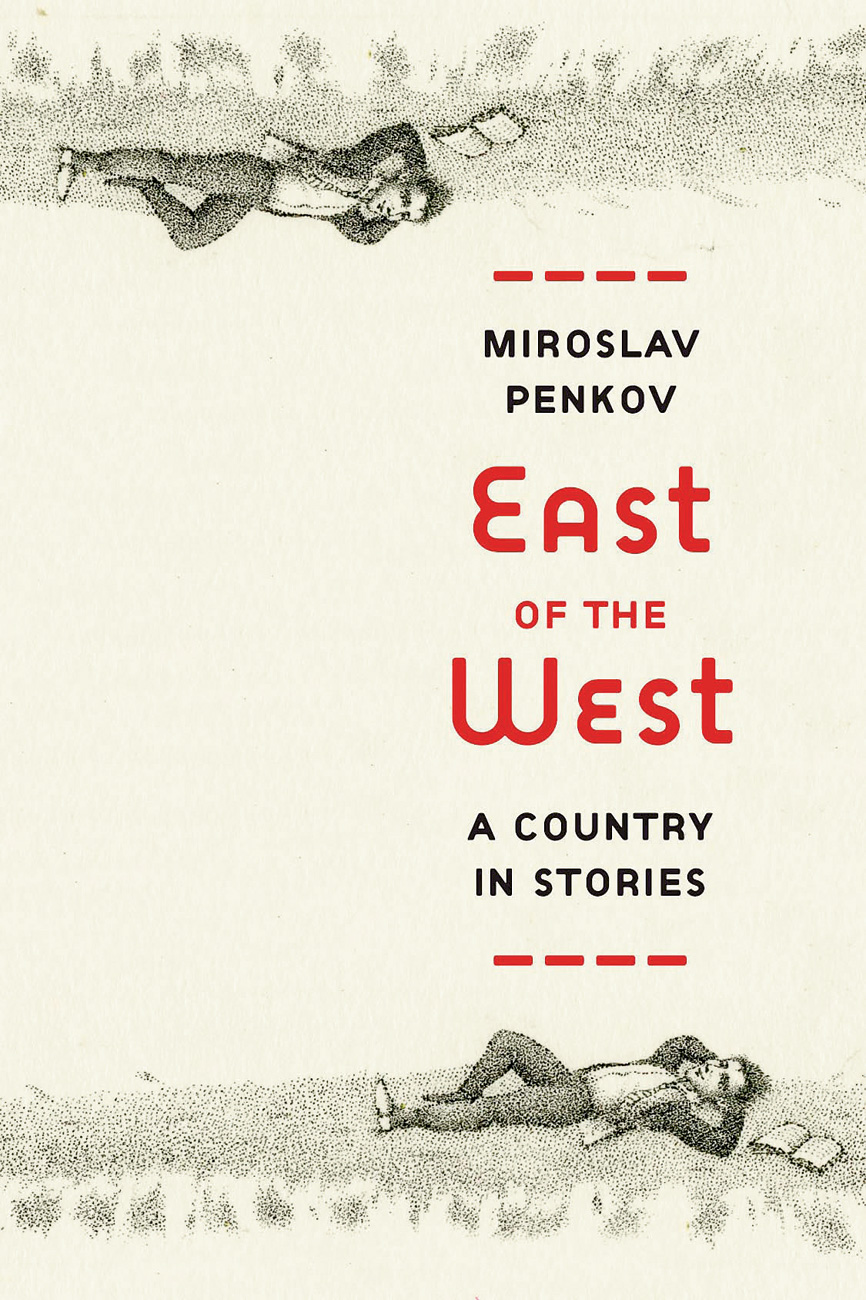
Two debuts by authors from the Balkans, both redolent of the history of the region, but quite different in tone and style.  Obreht’s novel is magical in the manner of a piece of folklore and features a picaresque cast, touching upon faded Ottoman glory, Nazi depredations and later religious strife. In East of the West, a spectrum of characters from Bulgaria – old, young, communist, Westernised -- reflect on that country’s past and how it’s affected their present. The upheavals that the area has witnessed may have redrawn the map, but, as Obreht and Penkof’s tales illustrate, myth and memory have their own contours.

Excerpt, The Tiger’s Wife: Everything necessary to understand my grandfather lies between two stories: the story of the tiger’s wife, and the story of the deathless man. These stories run like secret rivers through all the other stories of my life – of my grandfather’s days in the army; his great love for my grandmother; the years he spent as a surgeon and tyrant of the university. One, which I learnt after his death, is the story of how my grandfather became a man; the other, which he told to me, is of how he became a child again.

Excerpt, East of the West (from the story, ‘Makedonija’): I was born just twenty years after we got rid of the Turks. 1898. So yes, this makes me seventy-one. And yes, I’m grumpy. I’m mean. I smell like all old men do. I am a walking pain, hips, shoulders, knees and elbows. I lie awake at night. I call my daughter by my grandson’s name and I remember the day I met my wife much better than yesterday, or today. August 2, I think. 1969. Last night I pissed my bed and who knows what joy tonight will bring?


Recently raved about in terms that made me immediately want to procure a copy – and I’m glad I did. A delight to read, this is a series of witty, insightful episodes from the life of an acutely self-aware narrator, a pot-smoking American poet, while in Madrid on a fellowship. The question that hovers above his account of tangled relationships, attempts to write poetry and to speak in Spanish is: how does one ever fully express oneself, and is it even possible to do so?

Excerpt: As we entered the party I reminded myself to breathe....I was acutely aware of not being attractive enough for my surroundings; luckily, I had a strategy for such situations, one I had developed over many visits to New York with the dim kids of the stars: I opened my eyes a little more widely than normal, opening them to a very specific point, raising my eyebrows and also allowing my mouth to curl up into the implication of a smile. I held this look steady once it had obtained, a look that communicated incredulity cut with familiarity, a boredom arrested only by a vaguely anthropological interest in my surroundings...


LAZARUS IS DEAD Richard Beard

The story of the man famous for being brought back from the dead – told in a manner that weaves together Biblical scholarship, fictional episodes and literary references. Sounds like an unlikely amalgam, but it works wonderfully. Wholly inventive, completely new and very satisfying: you could say that Beard takes the form of the novel and, well, resurrects it.

Excerpt:  For Lazarus, in the last hour before his death, there is no miracle, no secret sign. The story as told by John abandons him, and a sequence he doesn’t understand is left, for him, unfinished: this is how death feels, and not just for Lazarus. Too soon; incomplete.


SUICIDE Edouard Leve (Trans. Jan Steyn)

An epigrammatic and haunting novella, in which the narrator reflects on the suicide of a friend. Haunting and disturbing, more so because Leve himself took his own life days after submitting the manuscript.

Excerpt: A dictionary resembles the world more than a novel does, because the world is not a coherent series of actions but a constellation of things perceived. It is looked at, unrelated things congregate, and geographic proximity gives them meaning. If events follow each other, they are believed to be a story. But in a dictionary, time doesn’t exist: ABC is neither more nor less chronological than BCA. To portray your life in order would be absurd: I remember you at random. My brain resurrects you through stochastic details, like picking marbles out of a bag.

THE TUNNEL Ernesto Sabato (Trans. Maragaret Sayers Penden)

First published in 1948, Sabato’s hypnotic novella takes us into the dark, deranged mind of a Buenos Aires artist, and comprises his prison-cell justification for murdering his mistress. The author died earlier this year, and thus, the 2011 Penguin Classics re-issue of Margaret Sayers Penden’s 1988 translation is an unintended homage. In any description of this work, there’s no choice but to use the word “existential”. (Colm Toibin’s preface to the new edition is to be found here.)

Excerpt: More than any other, however, I detest groups of painters. Partly, of course, because painting is what I know best, and we all know that we have a greater reason to detest the things we know well. But I have still another reason: THE CRITICS. They are a plague I have never understood. If I were a great surgeon, and some fellow who had never held a scalpel in his hand, who was not a doctor, and who had never so much as put a splint on a cat's paw, tried to point out where I had gone wrong with my operation, what would people think? It is the same with painting. 

Saturday, December 3, 2011

Flabby Fantasy

This appeared in today's The Indian Express.

1Q84 Haruki Murakami


A female assassin wielding an ice-pick. Shadowy members of an underground, quasi-religious sect. A group of so-called Little People from a parallel dimension. Eerie doppelgangers emerging from an “air chrysalis”.  A tale of a town of cats. And a sky with two moons. Wrapped together in cool, affectless prose with references to jazz, classical music, Hollywood and George Orwell. Who else but Haruki Murakami could have the chutzpah to combine all of these into a three-part saga totalling almost a thousand pages?  Halfway through 1Q84, however, another question arises: has his reach exceeded his grasp?

This brick of a book tells the intertwined stories of Tengo, putative writer and teacher of mathematics, another one of Murakami’s confused loners, and Aomame, massage therapist and avenging angel. The two met briefly in school and now, years later in 1984, events are set in motion that have them circling around each other in Tokyo and its environs, wondering if they will re-unite.

Aomame, stuck in traffic in the back seat of a taxi on Tokyo’s Metropolitan Expressway, decides to take a short cut by walking through an abandoned turn-off. The taxi driver prophetically cautions her: “Things are not what they seem... But don't let appearances fool you. There is always only one reality”. From here on, she’s plunged into an alternative existence, one that she calls 1Q84 -- with the “q”, in English translation, standing for a question mark: “a world that bears a question”.

Tengo, meanwhile, has his own problems to grapple with. He’s tasked by an editor to rewrite Air Chrysalis, the manuscript of a 17-year-old named Fuka Eri with storytelling skills but a raw, unfinished style. Drawn to this enigmatic, other-worldly teenager, Tengo completes the rewrite and the book goes on to become a bestseller. The ghost writer now finds that he’s opened a Pandora’s Box, as Air Chrysalis may not entirely be a work of fiction, after all.

Twin-track plotlines, alternative realities, sundered sweethearts and the loneliness of those who find themselves unable to fit in: Murakami has used all of these devices and themes before, though 1Q84 is probably his most detailed exegesis yet. It’s clear from the start that he intends this to be 'bigger' than his earlier work. The characters' backgrounds, clothes, diet, cultural and sexual appetites are dwelt upon in some detail, and then, there are creaky efforts to incorporate facets of contemporary Japanese history. Tengo's father for example, flees to Tokyo from Manchuria after the Soviet invasion in 1945 and there are references to the student movement to protest against US-Japan security treaty in the Seventies. All of this, combined with repetition and overwriting, means that the book is much larger – though ‘flabbier’ is a more apt word -- than it ought to be. 

Though there’s an engaging flow to most of 1Q84, with a patterned criss-crossing of action and reaction, there are also several examples of clichés and lazy writing. For example, on just a single page chosen at random, one finds Aomame musing that “what she needed...was to be held by someone, anyone”. A little later: “The gun had almost become a part of her body”. More troublingly, did we really need to be plunged into so much detail in the scene of intercourse with a pre-pubescent? (Bad Sex Award alert.)

The resonances with Orwell’s dystopia, too, seem alternately forced and underdeveloped. The virus-like Little People – a counterpoint to Big Brother, a malevolent version of the shoemaker’s elves – sometimes come across as more risible than menacing, especially when emerging from the mouth of a dead goat, uttering clunky dialogue. 

It turns out that at the heart of this bloated fantasy is a tender love story: “Tengo could hardly believe it -- that in this frantic, labyrinth-like world, two people's hearts -- a boy's and a girl's -- could be connected, unchanged, even though they hadn't seen each other for twenty years”. This, come to think of it, is an aspect that should appeal to those yearning for the Murakami of Norwegian Wood.

Perhaps if it had been published in three separate parts -- as was the case with the Japanese original -- the repetitions and recapitulations would not have grated as much. Murakami takes pains to point out on more than one occasion that Air Chrysalis, the manuscript that Tengo rewrites, is a mesmerising, vivid and taut novella. A pity, then, that 1Q84 doesn't quite share the same qualities.

Lady Sings The Blues

This appeared in last Sunday's DNA.

OUR LADY OF ALICE BHATTI Mohammed Hanif


Often, it’s an author’s signature tone of voice that’s the most effective part of his or her work. It’s a pleasure to come across a distinctive voice that animates characters and themes, throwing into sharp relief a particular view of the world.  If one looks at authors from Pakistan, for example, this is amply illustrated by H.M. Naqvi’s suave, jitterbugging style in Home Boy as well as his compatriot Mohammed Hanif’s sardonic, off-kilter take on General Zia’s death in A Case of Exploding Mangoes. In Hanif’s follow up, Our Lady of Alice Bhatti, one finds the same sardonic insights, and this is what makes the book gratifying.

Our Lady of Alice Bhatti revolves around the travails of its eponymous heroine, a senior nurse at Karachi’s Sacred Heart Hospital. A mixture of the tough-spirited and soft-hearted, Alice is from the country’s Dalit Christian community, and Hanif manages to fit in several swipes against religious belief of all stripes -- as well as against egregious caste segregation -- in the course of the book.

Alice is pursued by an unlikely swain, a former bodybuilder and unofficial police factotum named Teddy Butt. That they’re opposites is clear from the start; Teddy’s wooing of Alice is, as a character puts it, like “a cheetah falling for a squirrel or bats trying to chat up butterflies”. The cheetah and the squirrel quickly get together after a credulity-straining sequence  inside a submarine off the city’s coast. Hanif doesn’t spend much time on explaining the hows and whys: that these two dissimilar individuals enter into an alliance is the motor of the plot, and he makes it happen without too much fuss, and with the occasional veering into tenderness.

Along the way, one is introduced to a gallery of other characters in Alice and Teddy’s ken, from those who work at the hospital to police officers to patients, with their pomposities and perversions being skewered one by one. Tribute to Saadat Hasan Manto is also paid, among other things, in the form of describing the goings-on in the hospital’s “charya ward”, the so-called Centre for Mental and Psychological Diseases where daily doses of lithium appear to be the only medication on offer.

Every once in a while, Hanif throws in a reminder that, satire apart, he’s skilled in evocative observation, too. At one point, for example, we’re told that Alice Bhatti “carries her handcuffs lightly, as if she is wearing glass bangles”.

However, his sparring mockery extends to cover many sections of life in Pakistan, and because of this, the novel tends to comes across as a series of linked set pieces rather than a fully-integrated whole. It does hold together, but only just, helped by an unexpected structural twist at the end, one that’s satisfying without seeming contrived. Overall, though, it’s the healthy doses of irreverence, sometimes almost Rabelaisian, that make Our Lady of Alice Bhatti rewarding to read.

Saturday, November 12, 2011

In Search Of Love And Beauty

This appeared in today's Mint Lounge

A LOVESONG FOR INDIA Ruth Prawer Jhabvala


Comparisons have often been drawn between the work of Anita Desai and Ruth Prawer Jhabvala. A gentle melancholia pervades most of their tales, whether set in India or elsewhere, with characters being drawn into relationships and predicaments that, more often than not, leave them more alienated than before.  In their quests for rootedness, many such characters, one imagines, would echo the words Nehru so famously wrote in his autobiography: “I have become a queer mixture of the East and the West...out of place everywhere, at home nowhere”.

Desai’s latest collection of short stories, An Artist of Disappearance, was released earlier this year; now, as a handy counterpoint, we have Jhabvala’s own collection, A Lovesong For India. Translators, civil servants and others ill at ease with the ways of the world find a place in both volumes. To read both is to find that Desai is the better craftsperson, at the level of sentence and structure, while Jhabvala, less delicate but no less evocative, is more accomplished in creating the sweep of a life in just a few pages.

In A Lovesong For India, one finds the same preoccupations that have concerned Jhabvala from almost the start of her writing career. The search for redemption in the form of allegiance to spiritual figures; unequal relationships between disparate characters; and the faint Jamesian pulse of the seductive charms of an older civilization for those from newer cultures: all these can also be found in earlier stories such as the well-known ‘How I Became a Holy Mother’ or ‘Two More Under the Indian Sun’.

The stories here are largely divided between those set in India and those set elsewhere – primarily New York City’s Upper East Side – as was the case with Jhabvala’s earlier East Into Upper East. A last section comprises what could be said to be a combination of the two. Given the number of stories that feature variations on the theme of unequal alliances, the collection could well have been titled Odd Couples. An Oriental scholar from America comes to Delhi to be drawn into the muddled private life of a charismatic, ageing poetess. A lonely talent agent in New York takes under her wing a strange, waif-like aspiring singer. An influential film critic is drawn to a conniving actress. A fifty-something widow of a Hollywood studio head takes up with a young Indian writer-director in LA. An ageing Bollywood star starts to rely more and more upon his daughter-in-law. (Interestingly enough, though many of the characters are drawn from the worlds of film and entertainment, Jhabvala, as before, manages to keep her scriptwriting and fiction writing in separate compartments. The stories here are anything but cinematic in the telling, being more concerned with interiors than exteriors.)

Other stories bring to mind yet other aspects of Jhabvala’s work. There’s a whisper of Three Continents, for example, in the story of the secretary who moves to London to work with a charismatic director, only to find him becoming besotted by her brother. With the title story, though, there’s evidence of a newer, brasher India edging out the old in the contrast between the actions of an upright civil servant and his more business-minded son. Another trope, that of the differences between ‘real’ and ‘translated’ versions of India is touched upon in the tale where the American narrator translates the work of an author who was her former flatmate in New Delhi.

The story with which the collection ends is an odd, ethereal tale of an unlikely courtship between two wraith-like individuals, with much more being implied than said. The spectre of AIDS, the contrasting ties of blood and of marriage and the enervating effects of time are all encompassed in a somewhat eccentric mix. It’s deftly done, but undoubtedly strange in its wide ranging arc.

As with Desai’s stories, here, too, there are no pat endings. Rather, one is left with the plight of those who find themselves in scenarios not of their choosing, with a sense of life going on after the printed stories come to a close. It’s been said of Chekhov that, at the end of his stories, he returned his characters to life, and he himself once wrote that “obligatory for the artist is not solving a problem, but stating a problem correctly”. Bearing the burden of their problems, Jhabvala’s characters continue onwards – as one of her titles puts it – in search of love and beauty.